

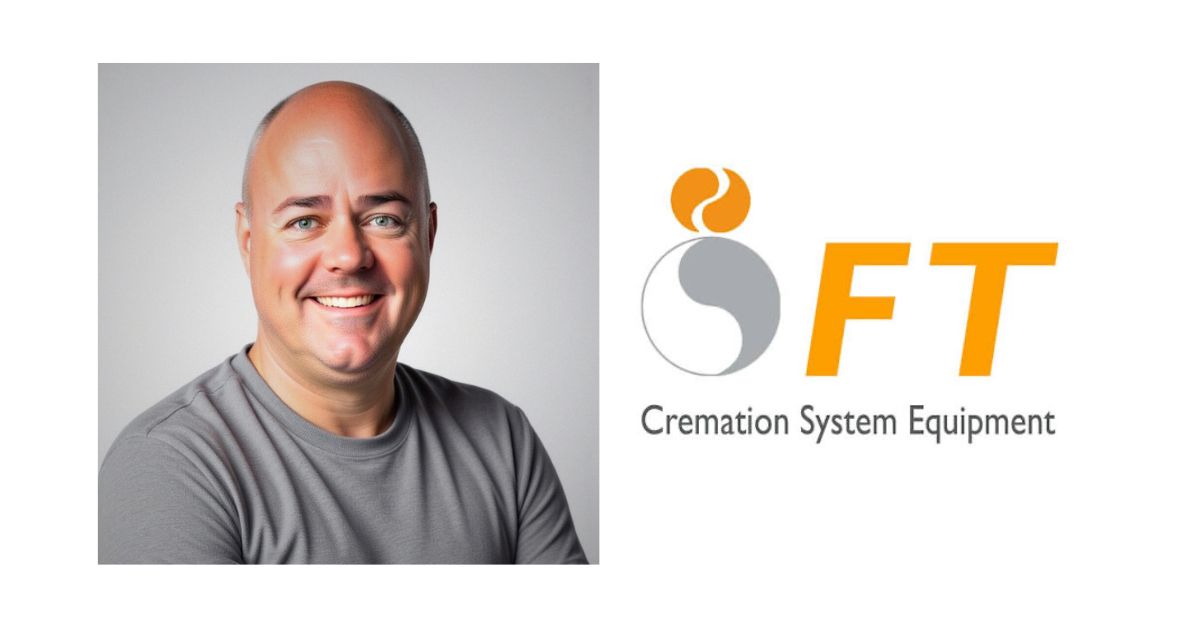
When FT announced that Mike Miller was retiring after less than three years as its chief operating officer for North America, I was a little confused. In my initial reporting on it I said something like, guys my age who retire usually retire from, like, the post office or the police force. I was happy he laughed when I told him that.
In my experience with deathcare, retirements and resignations are rarely what they’re claimed to be, so you’ll forgive me for getting this one dead wrong, although I do want to quibble with the word “retire.” Frankly, it’s something Miller isn’t real good at. This is his second time retiring this decade.
We’ll get to that in a minute, because the real story isn’t that he’s retiring, it’s the project that he’s been completing and now is underway that’s really worth discussing.
‘Too Much Machine’
“If you’re a volume player, if you’re doing a thousand cremations a year, you knew FT. You had an FT or you had talked to them at some point because the FT3 was built for volume,” Miller said. “If you’re a funeral home doing even [betwen 200-400] cremations a year the FT3 is really more horsepower than you need. It’d be like buying a Lamborghini to go to the grocery store. You know I mean it’s too much machine.”
As a result, smaller operators whoeven had heard of FT didn’t think of them when they were looking for a cremator. One of the things Miller’s been doing over the last three years is working to change that. FT re-engineered the FT3 for funeral homes that do lower volumes.
The engineers literally took an FT3 shell, chopped it up on the shop floor, and stripped back the unnecessary continuous-heat setup while retaining the core safety, emissions, and build quality. The result is the FTXL. Designed to handle cases up to 1,000 pounds.
Miller mentioned that they had just shipped their first one to a funeral home in Arkansas, which I thought was fascinating. I’d just reported on an Arkansas bankruptcy where the debtor blamed the rising cremation rates, they’ve gone from 45% before COVID to 54% today. Miller said that there was still a lot of opportunity for small market cremation.
Small-town funeral homes doing 300 or 400 cases a year suddenly find themselves losing money if they don’t own the machinery, because they’re forced to write off 30% of their revenue just to pay a third party to handle the process. When more than half your clientele chooses cremation, outsourcing isn’t sustainable anymore.
“Plus you have total control for your families, right? If a family wants to witness, you’ve got control over that. Anytime that body leaves your control, your reputation and everything else goes with it out the door,” he said. “[Even] if you’re doing 100 cremations, now is the time to think about adding equipment, whether that be FT or another brand, that’s the way those guys are gonna survive.”
A History of Bad Retirements
As for Miller, his latest retirement follows a career trajectory that clearly defies staying still. After 25 years with Stewart Enterprises, he first “retired” following the company’s sale to SCI in 2013. That lasted briefly before he joined the executive team at Australia-based Invocare for four or five years. A second attempt around 2019 proved equally unsuccessful. As it turns out, being 50 with no golf habit or time-killing hobbies makes for a boring afternoon when everyone else is at work.
When FT founder Patrick DeMaier reached out to help transition the business to new investors, Miller stepped in as we mentioned above. But bringing him on was always intended as a finite mission rather than a permanent gig. With FT’s branding firmly established and production demands requiring on-site manufacturing overhaul at the Medina, Ohio plant, Miller is handing the reins to manufacturing specialist Dustin Edwards.
What’s next?
“I my plan is to spend most of October in Europe for fun for once, it’s always been for work. Now we just get to relax and so we’re gonna go through Italy and Croatia and Greece and just spend take most of October and do that,” he said. “Then holidays of course come after that, so I’ll spend time just seeing family and friends through November and December and then we’ll see what comes up in January, you know? Take a look at what I need to do to make myself interested in what’s going on.”