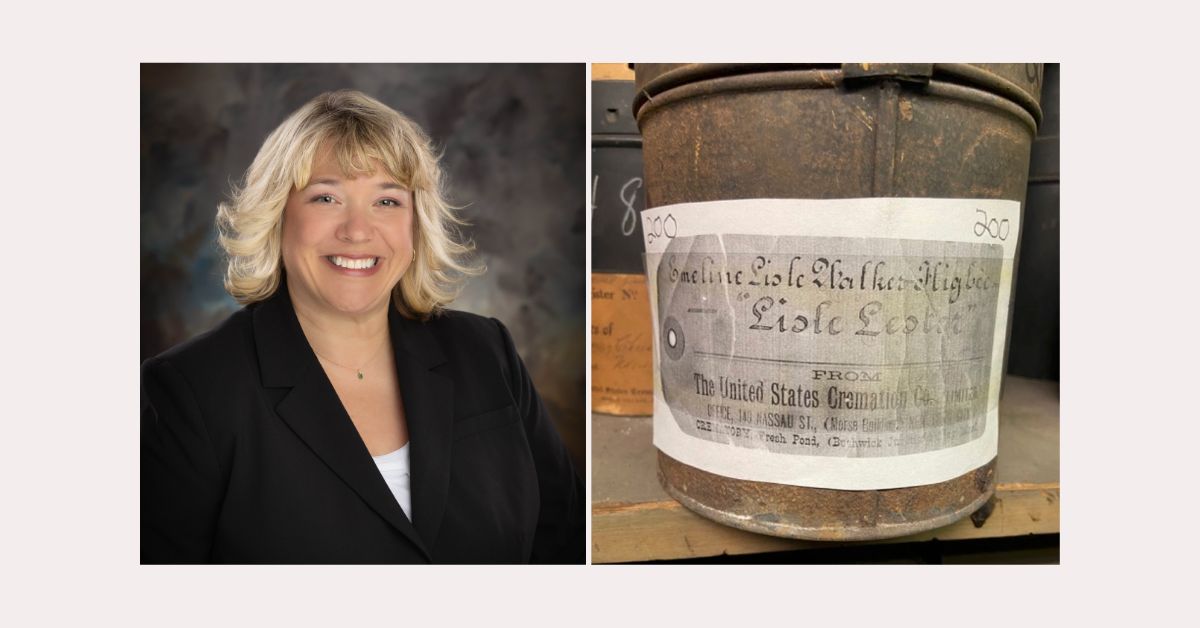


Regulators Failed Chicago Families By Giving the Morgans a Second Chance
By now you’ve seen the horrible headlines coming out of Chicago: 56 decomposing bodies pulled out of South Chicago Chapel, more than 50 boxes of cremated remains recovered, and, as of this weekend, a second facility, Bohemian National Cemetery and Crematorium, drawn into the investigation and shut down too, per CBS News Chicago.
Sadly, the body count and the horrific manner in which these remains were handled isn’t even the biggest point of discussion for deathcare professionals. It’s that this is the second scandal involving the owners of these Chicago facilities in eighteen months — and that the state of Illinois let them continue working with innocent, grieving families.
Warnings weren’t heeded
Clark and Johanna Morgan aren’t strangers to Illinois regulators. In February 2025, a tip led auditors to Heights Crematory in Chicago Heights, where they found bodies stacked in inoperable refrigerated trailers and improper containers — roughly 100 of them, according to Chicago Heights Patch. Illinois State Comptroller Susana Mendoza forced the facility closed and later made that closure permanent through a consent order, and nearly two dozen lawsuits followed, the Chicago Sun-Times reported.
None of this touched the funeral home, though. Johanna Morgan’s funeral director and embalmer’s license stayed active, with Clark Morgan’s name still listed as South Chicago Chapel’s president, right up until Illinois Department of Financial and Professional Regulation (IDFPR) finally suspended her license on August 5 — one day before officers found the 56 bodies.
Two agencies, one family, zero coordination
The reason the Morgans got to keep operating isn’t a mystery, but rather a jurisdictional divide. Crematories answer to the Illinois Comptroller’s office. Funeral homes and the directors who run them answer to IDFPR. Mendoza herself has argued the two functions belong under one regulator, telling CBS News Chicago that consolidating oversight into a single agency is exactly the kind of change that could prevent a repeat.
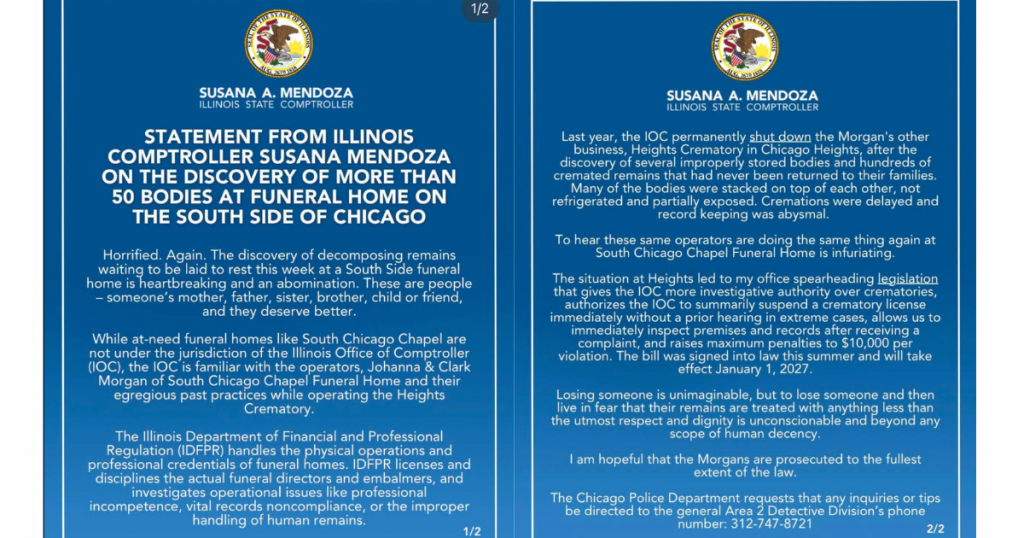
Right now, one agency can strip a license while having zero visibility into whether that same operator is still handling remains under a different license across town. This is the gap through which the Morgan family walked, unscathed by their well-documented and high-profile disgusting behavior.
The Illinois legislature has already responded to Heights Crematory. State Rep. Anthony DeLuca’s House Bill 4695, which would strengthen the comptroller’s investigative authority and tighten storage standards, cleared the General Assembly with bipartisan support, and Governor Pritzker signed it into law in late June. But the new law is crematory-specific, doesn’t take effect until January 1, 2027, and does nothing to close the licensing gap between crematories and funeral homes that let the Morgans keep working in the first place.
A single point of licensing — or at minimum, a mandatory cross-notification requirement between crematory and funeral director regulators — would have caught this the day Heights Crematory closed, not thirteen months and 56 bodies later.