

A 40-Year-Old Rule Just Got Axed — And Deathcare Has Reason to Celebrate
If you’ve been following the ongoing saga of formaldehyde regulations and what they mean for your embalming room, you’ll want to pay attention to what just happened at the Environmental Protection Agency (EPA) — because it’s big news for deathcare.
On April 27, EPA Deputy Administrator David Fatouhi issued an internal memo formally ending the agency’s use of the Integrated Risk Information System, or IRIS — the framework that has been used since 1985 to classify the health hazards of chemicals and establish how dangerous exposure to them is considered to be. Over the course of four decades, IRIS-generated toxicity values quietly became the backbone of a staggering number of federal and state regulations — air quality rules, environmental cleanup standards, chemical risk evaluations — affecting industries from agriculture to energy to, yes, deathcare.
So what does a 40-year-old bureaucratic framework have to do with funeral directors? Two words: formaldehyde regulations.
A “flawed” value for a critical chemical
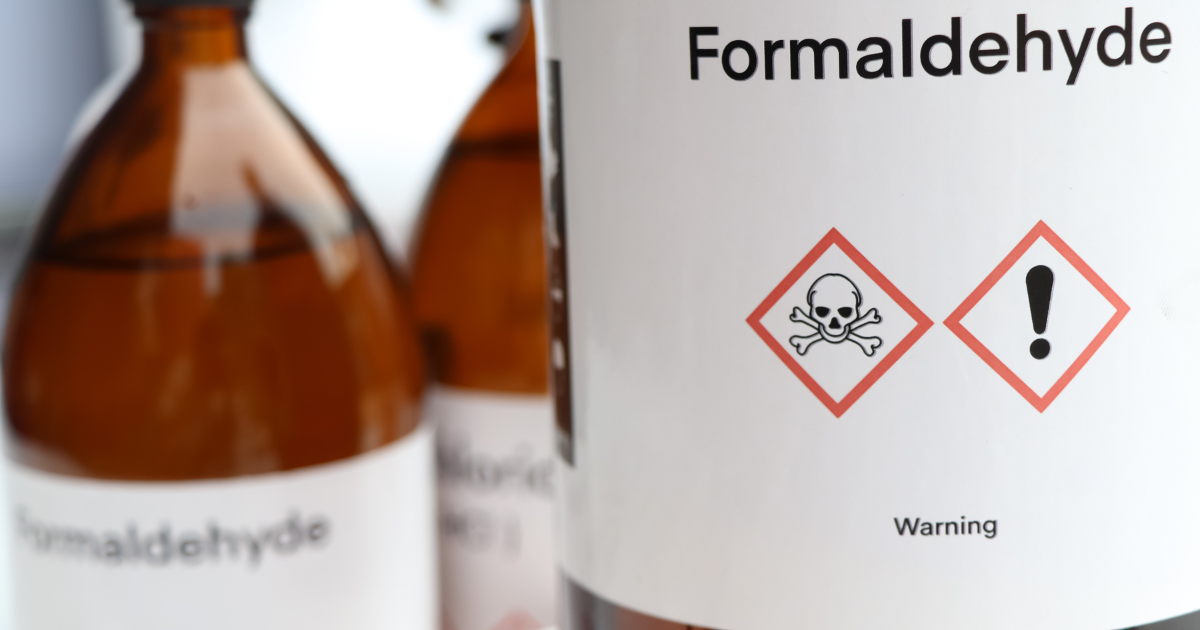
If you graduated from mortuary school, you know formaldehyde. You were trained on it, tested on it, and have used it responsibly throughout your career. You also probably know that for years, regulations based on IRIS toxicity values have made access to this essential embalming chemical more complicated, more expensive, and more uncertain than it needs to be.
The National Funeral Directors Association (NFDA) has been sounding the alarm on this for some time.
“Formaldehyde is a critical chemical used by funeral directors across America,” said NFDA Senior Vice President Lesley Witter, per the Daily Caller News Foundation/Western Journal. “Funeral directors are taught in mortuary school how to safely use formaldehyde. Our members have been concerned about access to this critical tool due to regulations based on a flawed IRIS value for formaldehyde.”
The NFDA wasn’t alone in that assessment — more than 80 trade associations and industry groups (representing everything from catfish farmers to miners to deathcare professionals) signed an open letter to EPA Administrator Lee Zeldin in January 2025, urging the agency to rein in what they called consistently and dramatically overestimated toxicity values.
What was IRIS, and why did it matter?
Here’s the short version: IRIS was an administrative program — never approved by Congress — that a centralized EPA office used to determine how hazardous specific chemicals were. Those determinations then rippled outward into regulations across dozens of federal programs and agencies, often with real-world consequences that critics argued bore little resemblance to actual risk.
One example Fatouhi’s own memo specifically called out was ethylene oxide, a chemical used to sterilize medical equipment. The IRIS toxicity threshold for EtO, the memo noted, had been set at a level “at least 10,000 times lower than levels naturally occurring in the human body.” That’s not a typo — ten thousand times lower. For industries whose chemicals landed on the wrong side of those overly conservative IRIS assessments, the regulatory consequences were significant, even when the science behind them was questionable.
What changes now
Rather than having one centralized EPA office issue hazard classifications for virtually every chemical under the sun, responsibility will now be devolved to individual EPA program offices — the people who actually administer specific statutes like the Clean Air Act. The idea is that risk assessments will be more “fit-for-purpose,” tailored to actual legal frameworks and real-world scientific context rather than one-size-fits-all thresholds from a single office.
The memo also directs those program offices to review existing regulations based on IRIS assessments, and adds a disclaimer to the IRIS website stating that its toxicity values “are not necessarily intended for use as regulatory levels.” That’s a meaningful signal for industries — like ours — that have spent years pushing back on restrictions grounded in IRIS numbers.
For its part, the NFDA welcomed the shift enthusiastically, with Witter expressing the organization’s happiness to “see EPA moving away from relying on unrealistic IRIS assessments and relying on high-quality Gold Standard science moving forward.”
Not everyone is applauding
To be fair — and it’s worth noting — not everyone is celebrating. According to Chemical & Engineering News, environmental advocates and some former EPA officials have raised concerns that moving chemical risk assessments into policy-focused program offices could allow political considerations to influence what should be purely scientific findings. Critics have pointed out that IRIS earned its reputation precisely because it was kept deliberately separate from the offices that write regulations — an attempt to insulate science from politics.
There’s also a practical concern: if multiple program offices each independently assess the same chemical, they could easily reach different conclusions. Who decides which assessment stands? Fatouhi’s memo, detractors note, doesn’t fully answer that question.
Per ProPublica, Robert Sussman, an attorney with experience at both the EPA and in private practice, warned that the memo now gives any company that wants to push back on a chemical regulation a ready-made argument: “Anybody who wants to ignore a regulation, permit or enforcement action can now just point to this memo and say the IRIS number it was based on wasn’t valid.”
The bottom line for deathcare
Like most regulatory shifts, this one isn’t simple, and there are legitimate perspectives on both sides. But for funeral directors who have watched formaldehyde access and use become increasingly complicated due to restrictions built on what the NFDA and others refer to as scientifically unsound IRIS values, this memo represents meaningful movement in the right direction.
The transition to new risk assessment processes across dozens of EPA program offices will take time. But the acknowledgment from the EPA itself that the old centralized approach was “not optimal” — and the directive to review regulations built on it — is something the deathcare profession has been working toward for years.
It’s also worth keeping an eye on the No Industrial Restrictions in Secret Act (yes, the No IRIS Act — you have to appreciate the acronym work there), introduced in Congress this year in both the House and Senate, which would permanently codify this rollback. If it passes, the shift from IRIS-based chemical classification becomes the law of the land, not just an administrative memo that a future administration could reverse