
Designing for Grief: How Retail Science Is Transforming Funeral Home Environments
For decades, funeral home selection rooms were built to display products.
Coordinated slatwalls. Casket cuts. Hardware samples. Fabric swatches.
Functional? Yes.
Emotionally supportive? Not always.
During the Funeral Professional Webinar Series (FPWS) webinar, “Meeting Modern Expectations: Redefining the Consumer Experience,” the discussion moved beyond digital strategy and into something equally powerful: physical space.
Jenn Parvin, Senior Vice President and Chief Customer Officer at Batesville, and Devin Dardanes, founder of B+N Industries and a specialist in retail environment design for high-emotion spaces, made it clear that modern consumer experience extends beyond technology. It includes atmosphere, and atmosphere shapes emotional response.
You’re Not Designing a Showroom.
You’re Designing an Emotional Experience.
When families enter your building, they are carrying emotional weight. Grief, logistics, family tension, financial decisions.
Heightened stress narrows thinking, complicates comparison, and drains energy. Your environment either steadies that moment or intensifies it.
Devin explained how major retail brands design with intention using lighting, materials, acoustics, and spacing. Every element influences how a person feels in a space.
Funeral service has historically prioritized function, but function alone does not create reassurance.
Retail Lessons Without Retail Pressure
There’s understandable resistance in funeral service to anything that feels “retail.” The word can sound transactional. But families are making purchasing decisions, emotional ones, yes, but decisions nonetheless.
Research shows:
- Lighting temperature influences mood and perceived trust,
- Natural materials reduce stress responses,
- Tactile interaction increases buying confidence, and
- Intentional layout improves decision flow.
When surroundings feel grounded and organized, decisions feel steadier.
That is not about selling more. It is about creating an environment that supports clarity of thought.
The Rise of Biophilic Design
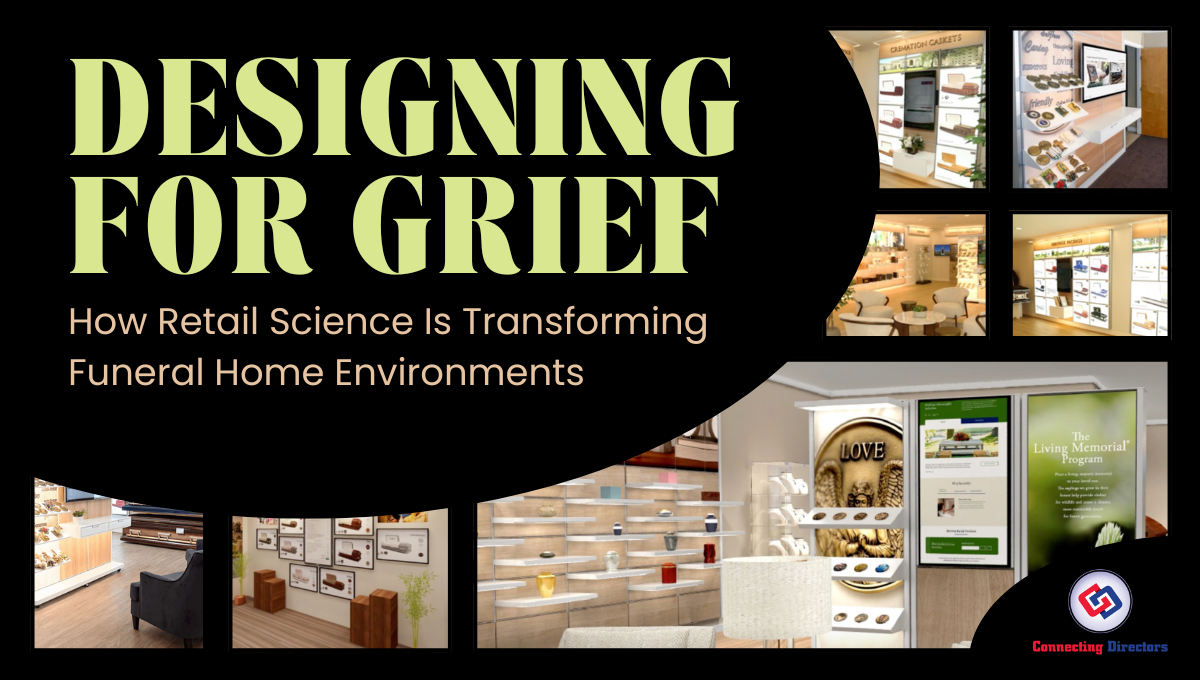
One concept highlighted in the FPWS conversation was biophilic design, integrating natural elements such as wood textures, warmer lighting, softer finishes, and open spacing to create environments that feel grounded and safe.
Humans are wired to respond positively to natural cues. In high-emotion settings, small environmental shifts can have outsized impact. Warmer lighting reduces perceived pressure. Thoughtful spacing reduces overwhelm. Integrated digital displays eliminate clutter while supporting personalization.
Now compare that to the traditional selection room:
Harsh or unbalanced lighting.
Wall-to-wall product boards.
Minimal warmth.
Maximum decision fatigue.
Those rooms weren’t poorly intentioned. They were built for function, not for emotional experience. And today’s families feel that difference.
Physical Space Must Match Digital Expectation
Jenn discussed omnichannel integration and the need for digital and physical environments to connect seamlessly. Environment is a critical part of that bridge.
If a family experiences products online and then walks into a space that feels disconnected from that experience, it injects confusion into an already difficult process.
But when the physical environment builds on what they’ve already begun to explore digitally, through interactive displays, intuitive layout, and intentional design, it transforms familiarity into confidence.
The goal isn’t to eliminate the selection room. It’s to evolve it.
Digital AND physical. Not digital OR physical.
Design Is Infrastructure
Modernizing your environment isn’t cosmetic. It’s strategic.
Firms updating their retail environments are seeing smoother arrangement conferences, stronger personalization adoption, and clearer differentiation in competitive markets. But the deeper impact isn’t financial. It’s emotional.
When families feel safe in your space, conversations change. Pressure decreases. Decisions feel clearer.
As the FPWS discussion reinforced, funeral service doesn’t need to become retail, but it does need to learn from it.
Because families aren’t just evaluating your service; they’re also experiencing your space, and that experience begins the moment they walk through the door.
Want to Hear More?
These themes were explored in depth during the “Meeting Modern Expectations: Redefining the Consumer Experience” webinar, featuring Jenn Parvin and Devin Dardanes. The on-demand recording is available exclusively for funeral professionals at Batesville.com/webinar. Log in or register for a free account to access the recording.