

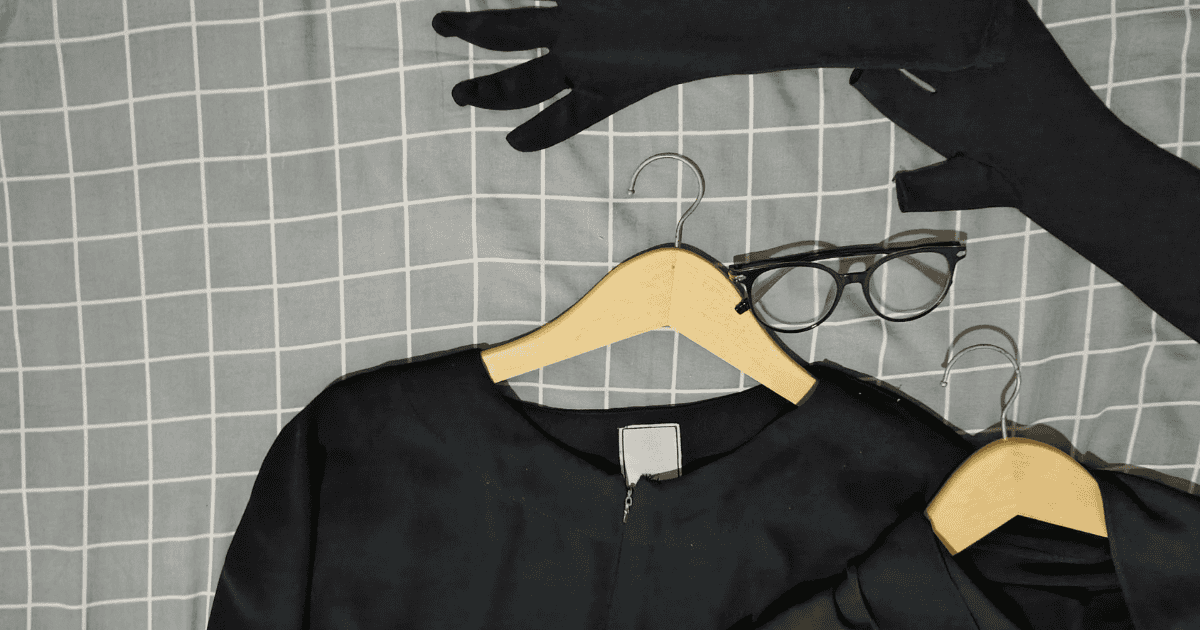
If your services include a final outfit for dressing the deceased, getting everything you need to do that in your hands as early as possible can eliminate a lot of potential snags later. Communicating the importance of timing, then, is sometimes necessary to help move things along.
All families, of course, respond differently to deaths. And though the question of clothing might sound relatively unimportant to some, funeral professionals know the need to receive the outfit for the deceased quickly because of how timing affects handling and flexibility across the entire case.
The rest of us would never really think of this.
Conveying importance
Loved ones might still be acclimating to a disorienting, new emotional landscape of loss. The request for clothing can be jarring.
Seeing the deceased fully prepped is one of the last experiences the family will have with their loved one, so it’s understandable that when faced with the requirement of making such a choice, some find it something to be put off as long as possible while the sense of absence settles.
And such delay may be something your business culture seeks to accommodate, depending upon circumstances, but when the window for easiest handling and preparation demands faster turnaround, sensitivity can’t always take priority. Preparation schedules, refrigeration availability, embalming decisions, and staffing needs are requirements from the business end of things. It’s all critical. So what level of divulgence is best with families?
One experience
My own family seems, as first glance, pragmatic and straightforward. You’d think us the type to prioritize fact and necessity. Several of us work in science-adjacent or emergency response positions; there are no squeamish sensibilities here.
It was alarming and disorienting when, following the sudden death of my husband’s father at just past sixty years of age, we found our typical emotional buffers entirely, and unexpectedly, absent, and ourselves with no compass.
Simply making a call to a funeral home — any funeral home — was debilitating, in an objective sense, to my mother-in-law. My husband, an only child whose profession was tragedy-adjacent, simply couldn’t, in the moment, even think about it. His focus was on the sudden void in his family and its trauma to his mother, a gentle, peaceful, and somewhat innocent woman who was alone when she found her husband. She was lost, so he was, too.
My own emotional resources, as a result, went instantly, directly, to both.
The result was a full-circuit overload of our entire collective bandwidth. We were unprepared. We were caught in the worst sort of surprise. Like many families, we had thought we had ample time.
So when we discovered ourselves as square one, my husband, the bereaved son who knew exactly the sequence of events that were necessary including their time requirements and the reasons behind them, stalled. The knowledge that was actual;ly part of his job was somehow just absent. Gone. Inaccessible. As if he did not possess it at all; as if its entry into his spehere of experience fundamentally altered it into something else, foreign, unknowable, and unguessable. Impossible.
Ultimately the first step toward death care fell to another relative, one with a little distance. In the moment, we felt only gratitude. Time didn’t figure for us, there was only the moment of loss. We thought exclusively of getting through it.
Only because we had gentle intervention, telling us where to go and when, we were able to make our way to an appointment with a funeral home.
Our Funeral Director
There seemed to be no edges to our experience.
He was an elderly gentleman, deferential and kind, with a sense of compassion was clearly heartfelt. Immediately identifying my MIL (who remained silent) as the point of greatest need, he made in-the-moment adjustments around her, including her in every part of the discussion. He carefully set her at ease.
Somehow everything was managed, all tasks completed: choices of clothing, methods, viewing, service, timing, obituary, handled in advance through a meticulous plan, before they had even occurred. Even now I don’t remember with any accuracy how long we were there for that first consultation.
But within a couple of hours of our leaving, our funeral director had tracked down the chaplain who had worked with my father-in-law thirty years before, a chaplain who had accompanied my FIL, a police officer, when he had to identify the body of his own mother, my husband’s grandmother, killed in a hit and run. Our funeral director managed to find, and then bring, this clergyman 30 years later, many miles from the city from which my father in law had retired, to officiate at his service, in 24 hours’ time.
None of us had known this chaplain existed.
Thank you
Our experience provided two things: the sense that all was addressed by capable hands which removed burden from us… and the sense that we were deeply, sincerely cared for as much as Dad by this process. All went off without a hitch: promptly, simply, elegantly.
It was two decades before I was able to appreciate the sophistication and elegance of these arrangements, how astonishing this funeral director’s achievement was, and the unobtrusive but profound talents of the man who led us into another stage of all of our lives, then quietly disappeared into the background.
None of us has ever forgotten how that man made us feel: safe in an emotionally violent, threatening environment.
Dad died in 2007, laid to rest in his police uniform. We still talk about our funeral director.
Preserving peace
Modern families have less understanding of the mechanics of death care than previous generations. The preventative nature of timing was at no point anywhere on our radar; we were fortunate that it was slipped invisibly into our experience without friction of even our understanding it.
Funeral directors manage expectations and quietly prevent problems the rest of us never see and may not ever even know exist. My family is one example. Our main memory, directly attached to the shock and trauma, is of its quiet, contradictory resolution in the hands of the expert whose attention directly began our healing.