
Connecting Directors
  • Home
  • Funeral News
    • Company News & Mergers
    • Association & Regulatory News
    • Legislative Updates
    • Supplier Announcements
  • Community & Culture
    • Lighter Side
    • Grief Conversations
    • Director Spotlights
    • Community Outreach
  • Trends & Innovations
    • Products & Startups
    • Tech & AI
    • Cremation & Aquamation
    • Green/Natural Funerals
  • Professional Guidance
    • Leadership & Management
    • Marketing & Social Media
    • Staffing & HR
    • Customer Service
    • Preneed & Sales
  • Video
    • DISRUPT! Series
    • Interviews & Panels
    • Trending Videos
    • Product Demos
No Result
View All Result
  • Home
  • Funeral News
    • Company News & Mergers
    • Association & Regulatory News
    • Legislative Updates
    • Supplier Announcements
  • Community & Culture
    • Lighter Side
    • Grief Conversations
    • Director Spotlights
    • Community Outreach
  • Trends & Innovations
    • Products & Startups
    • Tech & AI
    • Cremation & Aquamation
    • Green/Natural Funerals
  • Professional Guidance
    • Leadership & Management
    • Marketing & Social Media
    • Staffing & HR
    • Customer Service
    • Preneed & Sales
  • Video
    • DISRUPT! Series
    • Interviews & Panels
    • Trending Videos
    • Product Demos
No Result
View All Result
Connecting Directors
No Result
View All Result
Home Community & Culture

Repositories of Bones, Part Two: The Winding Underworld of Catacombs

Jennifer Trudeau by Jennifer Trudeau
October 14, 2026
in Community & Culture, Lighter Side
0
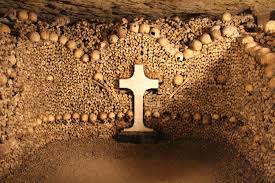
Catacombs in Paris
13
SHARES
30
VIEWS
https://www.facebook.com/disruptmg/https://il.linkedin.com/company/disrupt-media

Narrow subterranean corridors interlace for miles, linking vestibules, chambers, and hidden entrances. Ceilings and temperatures down here are chilly, and damp dimness pervades the disorienting, psychologically confrontational environment.

Both ossuaries and catacombs originally served society in practical but distinct ways, providing alternatives to standard practice when burial space ran out. Catacombs (the name comes from the Latin phrase for “beside the quarry”,) were built from disused underground caverns and passages reclaimed for new graves, unlike ossuaries where bones were placed after the decomposing elsewhere.

This extinct form of burial from ancient death care is unique — many sites remain accessible and allow close-up examination by scholars, death care professionals, and the general public. Once relatively common across Europe and surrounding regions, catacombs today are primarily tourist sites, macabre spectacles in high demand.

Famous examples

When we hear “catacombs” these days, the widely-known site in Paris almost always springs to mind first, though interestingly it’s relatively small, as catacombs go. About twenty meters of corridors and larger chambers display the skulls and long bones of millions of individuals in elaborate arrangements, smaller bones tossed behind the ornate facade.

The place is slightly misnamed. From the official website:
The site was consecrated as the “Paris Municipal Ossuary” on April 7, 1786, and, from that time forward, took on the mythical name of “Catacombs”, in reference to the Roman catacombs, which had fascinated the public since their discovery.

Because of health problems in the city limits, Paris cemeteries which had been consistently in use for a full thousand years (the city itself has been around for 2,000) were emptied, and occupants removed to caverns of a municipal quarry. This is what happens with any proper ossuary. Other catacombs are underground primary burial places where the newly dead were placed.

Why the deliberate misnaming? Originators thought the term more poetic and believed it would support acceptance, perhaps hoping to offset some of the scandal of its creation. Over a period of years during the mid-1700s, remains from the largest, oldest cemeteries in the city were relocated at night, taking place under cover of darkness to avoid public outrage.

History

The first catacombs on record have Christian associations. They began with the church as resting places for clergy and were intended for reverence or contemplation. As with ossuaries, land shortages and burial restrictions contributed to their creation.

Catacombs were once widely used, and they were still commonly added to up through the 1800s. There’s a long and illustrative history of their active use. These places present a spectacle of human mortality that still fascinates widely, and anyone can visit the real thing in Italy to see it firsthand — Palermo, San Sebastiano, and Domitilla which dates back to 120 AD. And San Callisto, one of the originals, boasts a crypt of popes.

Death spaces across time

Such truly extraordinary places offer an intimate view of a bygone era’s relationship with mortality. These are death spaces straight from history; today’s more perfunctory, technical equivalents of prep rooms, cemeteries, even columbaria and memorial halls or regionally astonishing examples in places like New Orleans, don’t have the same sort of architectural gravitas and expression. It’s an authentically mesmerizing view of the changes in social relationships with mortality and death care practices over time.


Jennifer Trudeau
Jennifer Trudeau

Contributor writing on grief, memorialisation and the human side of funeral service.

All posts by Jennifer Trudeau

Related Articles

Community & CultureTesla’s Flying Car Announcement Sparks Heated Debate Among Funeral Directors | FFFW 303October 16, 2026Community & CultureHonorable Nurses & Tech Failures | 4M #263October 12, 2026Community & CultureAI Obituary Describes 94-Year-Old Methodist Woman as ‘An Absolute Legend Who Lived Life in Beast Mode’ | FFFW 302October 9, 2026
Tags: CatacombsDisposition methods
Previous Post

10 Cigars & Tent Trouble | 4M #208

Next Post

Get Ready, Cemeteries: ‘Tis the Season for Necrotourists

Next Post
Necrotourism in Cemeteries

Get Ready, Cemeteries: ‘Tis the Season for Necrotourists

Job Posts Powered By: Deathcarejobs.com

Connecting Directors

Recent Posts

  • Tesla’s Flying Car Announcement Sparks Heated Debate Among Funeral Directors | FFFW 303
  • She Was Gone for 130 Years. This Funeral Director Brought Her Home
  • Not Your Grandpa’s Deathcare Community: Death Rocks Club Opens for Funeral Directors

Categories

  • Association & Regulatory News
  • Community & Culture
  • Community Outreach
  • Company News & Mergers
  • Cremation & Aquamation
  • Customer Service
  • Director Spotlights
  • DISRUPT! Series
  • Friday Funeral Fast Wrap
  • Funeral News
  • Green/Natural Funerals
  • Grief Conversations
  • Interviews & Panels
  • Leadership & Management
  • Legislative Updates
  • Lighter Side
  • Marketing & Social Media
  • Morticians' Monday Morning Mashup
  • Most Popular
  • Preneed & Sales
  • Product Demos
  • Products & Startups
  • Professional Guidance & Resources
  • Staffing & HR
  • Supplier Announcements
  • Tech & AI
  • Trending Videos
  • Trends & Innovations
  • Tukios
  • Uncategorized
  • Video
  • Community & Culture
  • Home
  • Home

© Connecting Directors. All rights reserved.

No Result
View All Result
  • Home
  • Funeral News
    • Company News & Mergers
    • Association & Regulatory News
    • Legislative Updates
    • Supplier Announcements
  • Community & Culture
    • Lighter Side
    • Grief Conversations
    • Director Spotlights
    • Community Outreach
  • Trends & Innovations
    • Products & Startups
    • Tech & AI
    • Cremation & Aquamation
    • Green/Natural Funerals
  • Professional Guidance
    • Leadership & Management
    • Marketing & Social Media
    • Staffing & HR
    • Customer Service
    • Preneed & Sales
  • Video
    • DISRUPT! Series
    • Interviews & Panels
    • Trending Videos
    • Product Demos

© Connecting Directors. All rights reserved.