

As you may know, most of my ideas come from scouring the internet for reporting about funeral homes. It’s why you’ll see things here that you won’t see anywhere else. I feel like it is as important to know what’s being said about the funeral industry in consumer media as it is to keep an eye on industry trends. Sometimes these items stem from local reporting, but the piece that caught my attention most recently, and which may make you sit up and take notice, was this press release from the National Law Review.
Titled “The Records That Matter in Funeral Home Negligence Cases,” it has a vague blood-in-the-water tone, citing not only the FTC reports from 2024 about Funeral Rule transparency failures, but also hinting at the various body mishandling scandals that have bubbled up. The piece reads almost like a cheat sheet since suing funeral homes is both high stakes and rarer than suing, say, grocery stores for slips and falls.
It encourages plaintiffs to zero in on the places funeral homes are most likely to have poor or insufficient documentation and suggests ways they might use these holes to prosecute a suit. I’ve taken that legal advice and reimagined it from a funeral home’s perspective. As always, it’s critical to maintain good records and to document all your training and practices. Still, this can serve as a gentle reminder that small inconsistencies can be the deciding factor between being open to a frivolous lawsuit and shutting one down.
The biggest takeaway, though, might be that the word is out: funeral homes can be vulnerable to minor slips when a family is dissatisfied with their service.
When a family has questions about a charge or service, opposing counsel won’t just take anyone’s word for it, they’ll build a complete timeline from your paper trail to spot any gaps between verbal promises and written agreements. Knowing what lawyers look for can help you keep your practices airtight and your business secure.
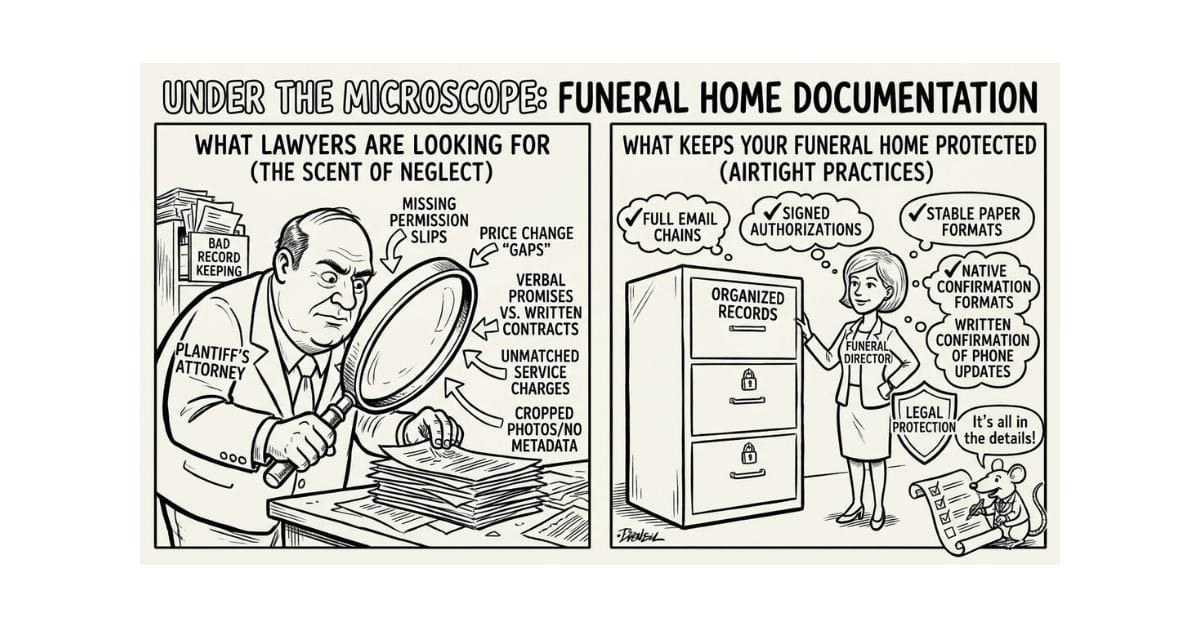
What Plaintiff Attorneys Look For
Attorneys start by comparing service contracts and family instructions directly against itemized statements to verify what was requested versus what was billed. They’ll place revised estimates right beside signed contracts to trace any modifications step-by-step. Because FTC findings highlighted pricing mix-ups during their phone checks in 2024, lawyers look closely for any mismatch between initial preneed quotes and final bills.
Counsel will also review complete communication threads and financial documents. They want full email chains with attachments, text threads, voicemail files, and letters, while actively seeking to reject incomplete screenshots or selective printouts. They’ll cross-reference invoices, receipts, card statements, and proof of any refunds or disputed charges against your initial conversations. Any written responses you send regarding billing concerns will also be scrutinized, as inconsistencies between your records and the family’s account can undermine credibility.
For cases involving physical care or custody, lawyers rely on transfer logs, handling records, identification forms, release documents, and cremation authorizations to verify custody and proper permission. Transport records help clarify what happened during a transfer, while dates on incident reports or crematory correspondence help confirm key events. When photos or videos are involved, attorneys insist on source files with intact metadata to verify creation details, making cropped images inadequate.
How to Keep Your Records Airtight
To protect your operation, stick to solid preservation habits. Keep stable paper files for contracts and receipts, and store digital records in their native formats without altering the source pages. Keep working notes, scans, and annotations in separate folders rather than writing directly on master documents. Save image files uncropped, hold onto email exports alongside postmarked envelopes, and back up two digital copies in secure, separate locations with limited access. If a family updates their preferences verbally, send a quick follow-up message confirming the adjustment in writing and keep a record of the sent date.
By confirming verbal updates in writing, keeping complete message threads intact, and maintaining well-organized files, you ensure your documentation clearly reflects the facts and keeps your funeral home fully safeguarded.