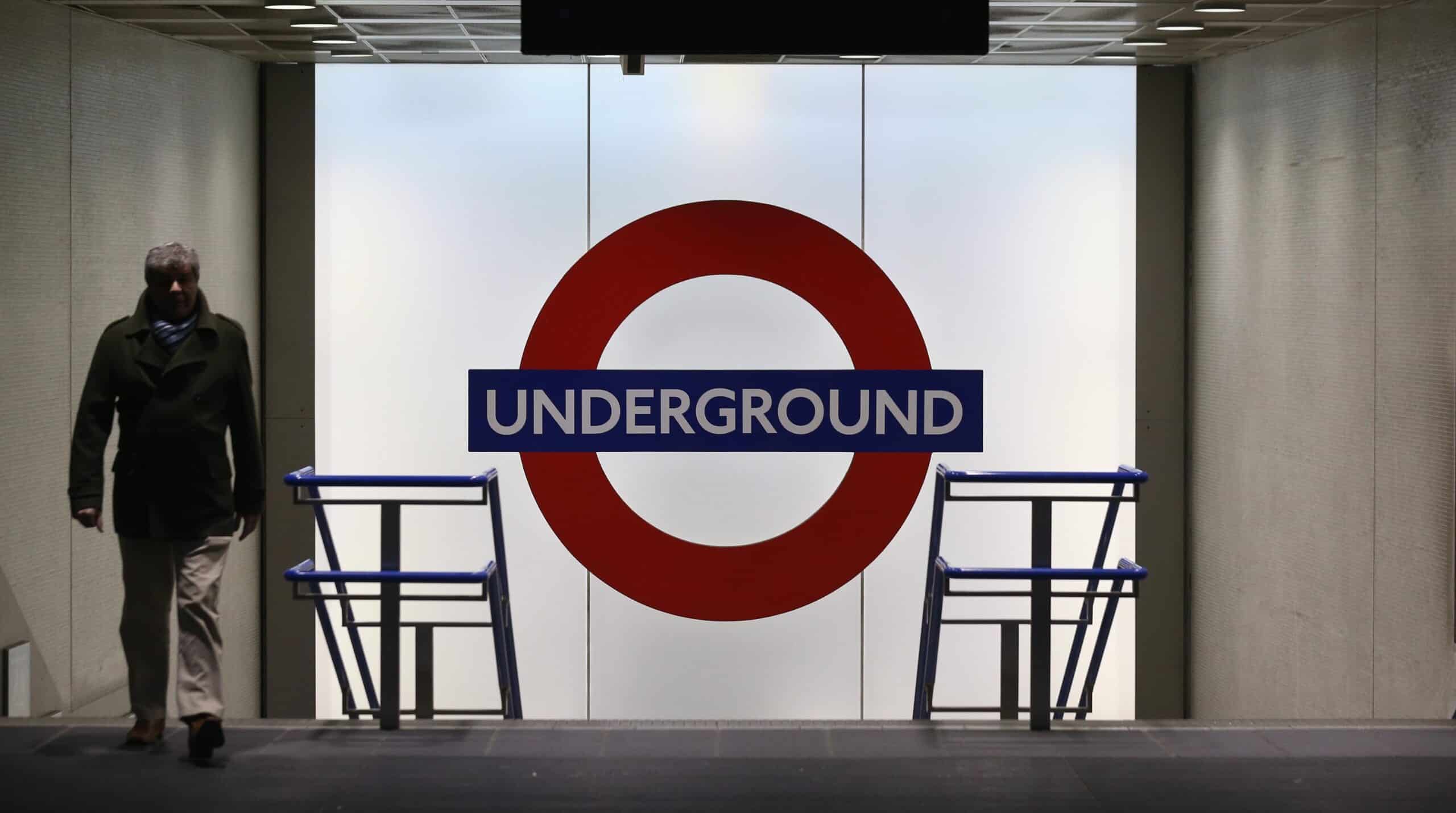
As Mexico City archaeologists sort through the surreal array of Aztec sacrificial skulls recently uncovered while excavating their city’s subway system, it’s worth remembering that parts of the London Underground were also tunneled, blasted, picked, and drilled through a labyrinth of plague pits and cemeteries.
In her excellent and morbidly fascinating book Necropolis: London and Its Dead, author Catharine Arnold describes in detail the subterranean presence of corpses found throughout the British capital. To no small extent, she makes clear, dead bodies were basically buried everywhere, to the point that, as Arnold pithily states, “London is one giant grave.”
Finally, at the end of this post, we’ll get back to how all these bodies affected the construction of the Tube—London’s subway—which is why this post was started in the first place.

London Hospital students play football on hospital grounds; photo courtesy Getty Images
Hollow Ground
The London Hospital maintained its own on-site burial ground for six years, from 1849 to 1854. However, Arnold explains, “burials continued until about 1860, with porters acting as gravediggers.” Somewhat astonishingly, we learn that housing projects for the medical staff were then built over these old graveyards—and the coffins were not very far below the surface.
As Arnold describes, this made for some rather unsafe ground conditions:
The remaining part of the burial ground became a garden for nurses and medical students, complete with tennis court, “where they are in the habit of capering about in their short times off-duty, and where it sometimes happens that the grass gives way beneath them—an ordinary occurrence when the subsoil is inhabited by coffins!”
In other words, these tennis-playing nurses “capering about” on their grass tennis courts would occasionally and literally fall through the surface of the earth only to find themselves standing in the rotting coffins hidden under the soil, an infernal honeycomb of badly tended graves like something out of Dante.
This image—of women frolicking in their 19th-century sports gear suddenly falling into coffins—is absolutely astonishing and surely belongs in a movie coming soon to a cinema near you.
Ooh, That Smell
Far more horrifically, some local churches got in on the financial action of corpse disposal by accepting dead bodies—along with the high fees associated with their interment—only to do nothing at all with the corpses but toss them down into the cellar.
One church was so bad, Arnold writes, that its parishioners would often pass out from the horrible smell of rotting and partially liquified bodies wafting up from below.

Photo courtesy Fox Photos/Getty Images
A particularly nightmarish location described by Arnold is Enon Chapel, a Baptist church founded “as a speculative venture.” That is, the minister—a Mr. W. Howse—was in it purely for the money.
Arnold’s own description of what happened next says it best:
Worship there was a dangerous business; for members of the congregation frequently passed out—yet, because nobody guessed at the minister’s appalling secret, it never occurred to them that the cause of their sickness lay beneath a flimsy layer of floorboards, in the vault of the chapel.
In warm, damp weather, local residents were assaulted by a peculiarly disgusting smell. Occasionally, when a fire was lit in a nearby building, an intolerable stench arose, which did not originate from the drains. Vast numbers of rats infested the houses; and meat exposed to the atmosphere turned putrid after an hour or two.
The parishioners could even taste it, apparently: an acrid, oily slick on their tongues, resulting from the humid corpse-fog that filled the church, a kind of artificial weather system created by the dissolving bodies of the dead jumbled up beneath the floorboards.
Mind-bogglingly, when all of this was finally discovered, how many corpses do you think London city authorities found down there? Several dozen? A few hundred, perhaps?
They found twelve thousand corpses. 12,000 corpses all turning into jello and contaminating the local water supply.
The Unforgettable Fire
Yet those churchgoers were lucky to escape with their own lives. At times, Arnold writes, London’s urban burial grounds simply exploded, their cheap coffins dangerously over-pressurized from within with corpse gas.

Image courtesy Getty Images
The resulting subterranean infernos, for the most part limited to the crypts and basements of churches, were physically repellent and not at all easy to extinguish. “In the 1800s,” Arnold writes, “fires beneath St. Clement Dane’s and [architect Christopher] Wren’s Church of St. James’s in Jermyn Street destroyed many bodies and burned for days.”
To help prevent these corpulent bombs from bursting, sextons of the churches were required to “tap” the coffins now and again; this tapping would jostle the bodies within and thus “facilitate the escape of gases which would otherwise detonate from their confinement.”
Read full article here: http://connectingdirectors.com/articles/43327-im-sorry-to-hear-continues-expansion-across-the-usa