
Connecting Directors
  • Home
  • Funeral News
    • Company News & Mergers
    • Association & Regulatory News
    • Legislative Updates
    • Supplier Announcements
  • Community & Culture
    • Lighter Side
    • Grief Conversations
    • Director Spotlights
    • Community Outreach
  • Trends & Innovations
    • Products & Startups
    • Tech & AI
    • Cremation & Aquamation
    • Green/Natural Funerals
  • Professional Guidance
    • Leadership & Management
    • Marketing & Social Media
    • Staffing & HR
    • Customer Service
    • Preneed & Sales
  • Video
    • DISRUPT! Series
    • Interviews & Panels
    • Trending Videos
    • Product Demos
No Result
View All Result
Connecting Directors
No Result
View All Result
Home Community & Culture

Everest’s Graveyard: Permanent or Purgatory (Part I)

Jennifer Trudeau by Jennifer Trudeau
July 29, 2025
in Community & Culture, Community Outreach
0
Mt Everest
17
SHARES
40
VIEWS
Share on FacebookShare on LinkedIn

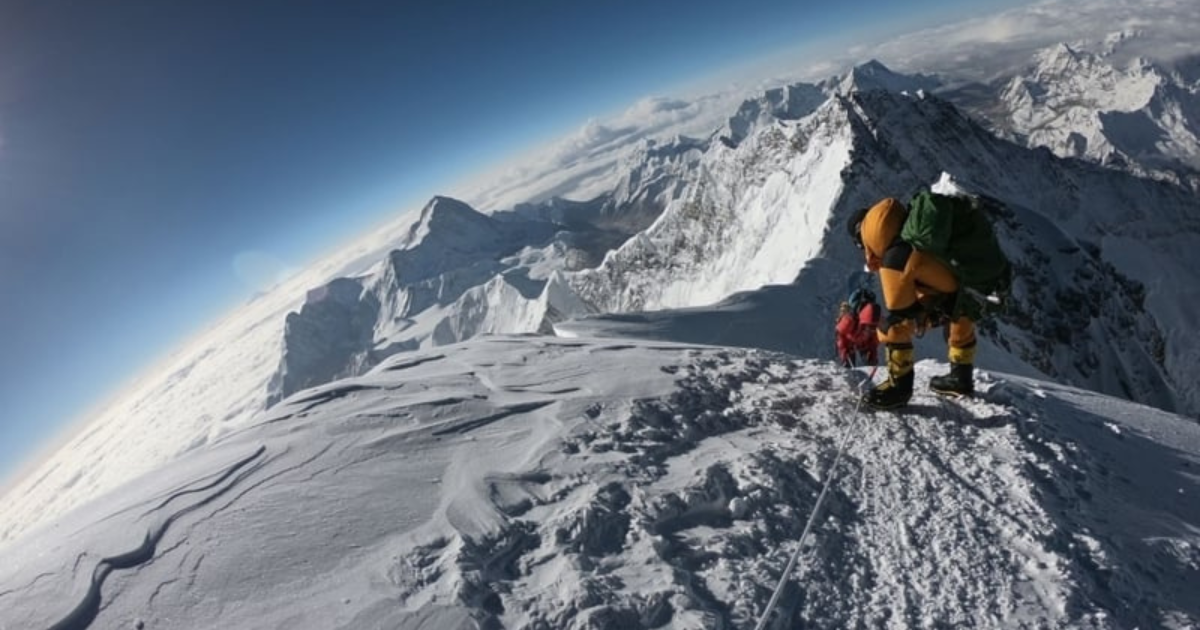
It’s no mean feat to recover the fallen from Everest, Earth’s highest mountain; the climb is notoriously deadly for all kinds of reasons (hurricane-level sub-zero winds; thousand-foot fatal falls; hypoxia; altitude sickness; avalanches; crevasses; and pulmonary and/or cerebral edema among them) and claims multiple lives every year. Human remains dot the landscape, serving as markers along the route.

Every year the mountain’s permanent population grows, partly due to the rising popularity of “summit tourism” (a trend of selling guided tours to climbers of questionable ability, an attempt that regularly claims the lives of the most experienced professionals). At this date there have been about 350 deaths, with an estimated 200 bodies remaining on the slopes.

As much as for its height, Everest is known for this ghastly display of victims. Nearest the summit, many still lie where they fell: an open-air graveyard dubbed Rainbow Valley for the colorful, frozen corpses adorning the last few thousand feet of the ascent. Bright down jackets poking through the snow along the route like colorful, grisly jewels.

Attempting retrieval

Many who die on Everest are likely to stay there forever, because it’s often impossible to get them down. A frozen body can weigh 300 pounds; depending on how long it has lain there, it can take hours, even days, to free from the ice. Once removed, frozen quite solid, remains are as apt to shatter into pieces as any icicle… and must be transported down the treacherous mountain. No helicopter assistance is possible above 21,000 feet; at this altitude, they cannot fly.

The process of removal (called “repatriation”) requires the efforts of entire professional rescue crews, often Sherpas, local climbers whose lungs are adapted to the altitude and often have elite abilities. Some have lost their own lives in recovery attempts. Only highly specialized teams trained in body extraction are granted permission, and costs are prohibitive at $20,000 – $70,000 USD or more per body.

And even with such skill and experience, attempts may fail. Locating remains is not always possible, or access may change due to natural processes in the Himalayas, such as earthquakes, avalanches, and rock collapse. Bodies may now be buried under feet of snow and ice.

Even if pinpointing the location of remains is possible, there are legal hurdles to overcome before a body can be removed, because the two main routes to Everest’s summit lie in different countries – the south in Nepal, the north in China — and each imposes its own legal requirements for the repatriation of remains being taken from the mountain.

Once the appropriate permissions have been obtained and the body is successfully recovered, remains will be handed over to local authorities for their own processing, and when complete, next of kin is notified.

The process may take months; sometimes the ordeal is worthwhile for a family in mourning, who will do whatever it takes to being their beloved home. And for all the challenges associated with the task, there’s no question of their commitment to seeing it through.

Once they come home and make it to the capable hands of death care pros, any number of special considerations of processing the bodily and psychological aftermath.

Then the real work begins.

What role do funeral directors play in this involved and convoluted process? Watch this space for Part II in this series on the recovery and processing of bodies from extreme mountain environments

Jennifer Trudeau
Jennifer Trudeau

Contributor writing on grief, memorialisation and the human side of funeral service.

All posts by Jennifer Trudeau

Related Articles

Community & CultureApply Now: OGR Foundation 2027 Awards of Excellence ScholarshipsNovember 2, 2026Community & CultureFuneral Director Spends Halloween Explaining That Coffins And Caskets Aren’t The Same | FFFW #305October 30, 2026Community & CultureSound Familiar? The Looming Deathcare Workforce Crisis in OntarioOctober 30, 2026
Tags: Mt. Everest
Previous Post

Starmark Celebrates 20 Years of Innovative Rental Insert Design

Next Post

Flu Season Delayed, Revenue Slightly Derailed—But Carriage Services Is Still Winning

Next Post

Flu Season Delayed, Revenue Slightly Derailed—But Carriage Services Is Still Winning

Job Posts Powered By: Deathcarejobs.com

Connecting Directors

Recent Posts

  • So-So Cemetery Sales, ‘Volume,’ Force Carriage to Lower 2026 Targets
  • Christopher Costello Resigns from NFDA Board of Directors
  • How an Unapproved Roof Flue Triggered a Crematory Zoning War

Categories

  • Funeral News
  • Community & Culture
  • Trends & Innovations
  • Professional Guidance
  • Video
  • Community & Culture
  • Home

© Connecting Directors. All rights reserved.

No Result
View All Result
  • Home
  • Funeral News
    • Company News & Mergers
    • Association & Regulatory News
    • Legislative Updates
    • Supplier Announcements
  • Community & Culture
    • Lighter Side
    • Grief Conversations
    • Director Spotlights
    • Community Outreach
  • Trends & Innovations
    • Products & Startups
    • Tech & AI
    • Cremation & Aquamation
    • Green/Natural Funerals
  • Professional Guidance
    • Leadership & Management
    • Marketing & Social Media
    • Staffing & HR
    • Customer Service
    • Preneed & Sales
  • Video
    • DISRUPT! Series
    • Interviews & Panels
    • Trending Videos
    • Product Demos

© Connecting Directors. All rights reserved.