
Selected Members Push Back: Inside the NFDA Acquisition Backlash
Ever since Selected Independent Funeral Homes announced its intention to sell to the National Funeral Directors Association, longtime members of the organization have been fighting to find out, not only the whys of it, but also whether there are any other options. In my earliest reporting, and other reporting on this site, member retention has taken center stage.
While Selected reiterates that it is losing members to consolidation, the fact is, most members leave because they don’t find value in their membership. I had the chance to speak with several prominent members and past presidents of Selected about this and other issues. All of these people voiced deep concerns that leadership is rushing the high-stakes transaction without transparency, meaningful member consultation, or adequate explanation.
Since this conversation took place, the Selected board has doubled-down on its insistence that the only way to keep Selected independent is to sell to a larger corporation. But that has kind of been the ready-fire-aim approach both the NFDA and Selected boards througout this process. And that’s not just me from the outside.
All of these longtime members expressed shock over learning about the potential sale through public press releases or brief notices received just moments before the public announcement.
Past President Glenn Taylor recalled his notification, which was a phone call saying that the board had decided to look into selling to the NFDA.
“They said, ‘Now we’re gonna take it public.’ And I said, ‘When?’ And they said, ‘In an hour.’ So that’s the first that I had heard about it.”
Nathanael Billow called the six-week rollout “very nonstandard” for the 110-year-old association, describing the official business meeting at the annual convention in Louisville as “nuts.” He noted that members were given only 80 minutes to discuss the most consequential decision in the organization’s history.
“This is the first time that it’s come from the top down. It’s been rushed. There’s not a lot of information that’s been shared,” Billow said, adding that Selected has faced difficult and contention decisions as a group before. “For the first time ever in the history of the association, the board members are not actively listening to their members.”
Lack of Transparency and Unanswered Questions
Second only to the surprise-attack approach to the decision and announcemen, people I spoke with found the severe lack of tangible information provided by association leadership irksome.
Taylor explained that he went to the annual meeting unable to decide on his vote because basic details remained unclear.
“Am I saying unequivocally that a merger with NFDA is the worst thing that’ll ever happen? No,” Taylor said. “But I’m certainly not saying yes either because I don’t have enough information to make a decision.”
Past President Eric Trimble raised concerns that a non-binding Memorandum of Intent exists between the boards, but leadership refused to share its contents with members on the advice of legal counsel.
“Apparently the board has seen it, but they said two attorneys, our attorney and NFDA’s attorney, both told them they couldn’t share it with the members,” Trimble said. “Which raises a question: what’s in it that we’re being asked to vote on?”=
John C. Greco, whose firm has held membership for 55 years, likened the situation to a blind date.
“It’s almost like if I asked you to go on a blind date because you’re gonna marry this girl after your date, but I’m not gonna tell you anything about her,”Greco said. “They gave us no information, very little information, how this is going to affect the membership of Selected. And they want to basically jam it down your throat.”
Questions were also raised over shifting voting thresholds. Members were initially informed that a two-thirds majority vote of the membership would be required to approve the transaction. However, at the Louisville meeting, leaders admitted that only a simple majority is strictly required,a sudden revelation that left many feeling uneasy about governance.
“If they’re wrong on this and they don’t know what they’re doing to even pass the measure, it begs the question, what else do they not know?” Billow asked.
Beyond that, as several commenters pointed out, there’s no winning with 51% in an organization that’s already suffering from retention issues. It’s not like this is a business deal where as long as everyone is a little disapointed it was probably the right decision. Here, giving up and selling out or shutting down are what’s on offer from the board, and it just isn’t flying.
Chris Branson summarized the group’s frustration over being asked to approve a deal blindly.
“Not one person involved in Selected Independent Funeral Homes would sell their funeral home and not know what the future holds for them or their organization,” Branson said. “And that’s what they’re asking us to do.”
Concerns Over Identity and Governance
For decades, Selected has functioned as an elite, invitation-only network dedicated to peer-to-peer exchange and strict independent ownership. Many members feel that merging into NFDA directly threatens the core identity of Selected.
Boyd Mothe, a fifth-generation funeral director, criticized leadership for treating the acquisition as an inevitable outcome rather than presenting multiple strategic options with member input.
“Instead they show up and they said, ‘Everybody, we’ve got a bus out front. Everybody get on board. No, ther’’s no talking. Just get on board,’” Mothe said. “‘Well, where are we going?’ ‘We’re not really sure.’ ‘Will we be the same when we arrive as we were when we got on the bus?’ ‘Things are going to be different.’ ‘Well, in what way?’ ‘We’re not really sure.’”
Other directors, including Paul St. Pierre, pointed out that board selection processes in recent years have favored newer, less-experienced members while passing over veteran leaders. This has raised questions about whether the current board adequately reflects the broader membership’s wishes or has been overly reliant on executive staff.
Trimble highlighted the fundamental paradox of the proposal.
“For over a hundred years, Selected has promoted the value of independence,” Trimble observed. “And now we’re being asked to go corporate. And that’s a total change in all of the philosophy of everything that Selected stands for.”
Calls for a ‘No’ Vote to Reevaluate
While members agreed that Selected faces long-term financial and demographic challenges, they argued that alternative solutions, such as restructuring internal governance or partnering with an Association Management Company, should have been thoroughly vetted and presented first.
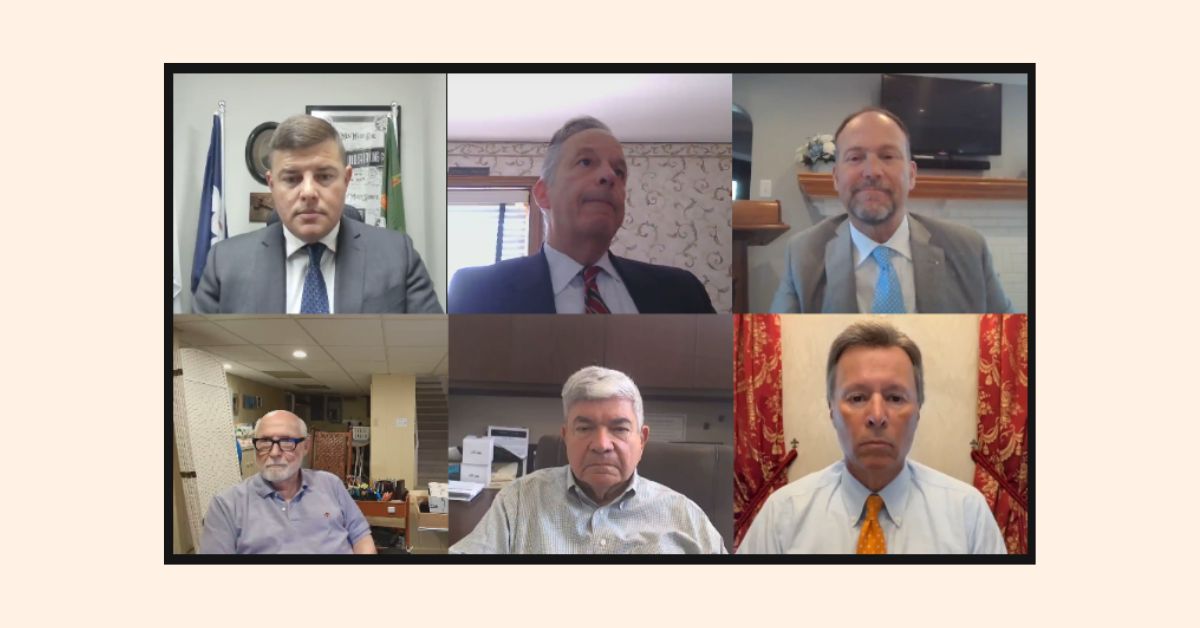
Panelists overwhelmingly indicated they intend to vote “No” on the upcoming proposal, stressing that a negative vote is not a vote to stand still, but rather a demand to pause the process, rebuild trust, and explore alternative solutions that preserve Selected’s independent legacy.
“A ‘No’ vote has never been a vote for the status quo by any means,” St. Pierre emphasized. “We’re trying to vote to just examine other ways to modernize and strengthen Selected, but preserve its identity and independence. It’s that simple.”
Taylor concluded by noting that members have a responsibility to help rebuild if the deal falls through.
“It’s one thing for us to say, ‘No, don’t do this,’” Taylor said. “But I think we also have an obligation to say, we’ll work on making it what it needs to be today.”