
Before I Die Wall: Turning Grief into Connection with Public Art
Usually when artists or community organizers erect a “Before I Die Wall” they want to transform a neutral urban environment into a canvas for human reflection. But for Megan Nagy, supervising mortician and HR manager at Candle Light Funeral Home by Craig Witzke in Catonsville, Maryland, installing an interactive art project directly on funeral home property made perfect sense. After all, where better to start a conversation about mortality, purpose, and prearrangements than on the grounds of a deathcare provider?
Nagy, who has spent 12 years at Candlelight Funeral Home after starting out as a weekend hostess during high school, wanted to find a creative way to engage the surrounding town. Catonsville boasts a vibrant arts and entertainment district, so art installations aren’t a foreign notion for residents. An art installation at the funeral home, though, was a different proposition altogether, but that was precisely the point.
“We don’t want people to be scared to come here. We wanted it to feel more of a community gathering place,” she said. “Obviously it’s a place of mourning and grief, but we don’t want people to associate sad feelings with this building. We want people to feel comfortable here.”
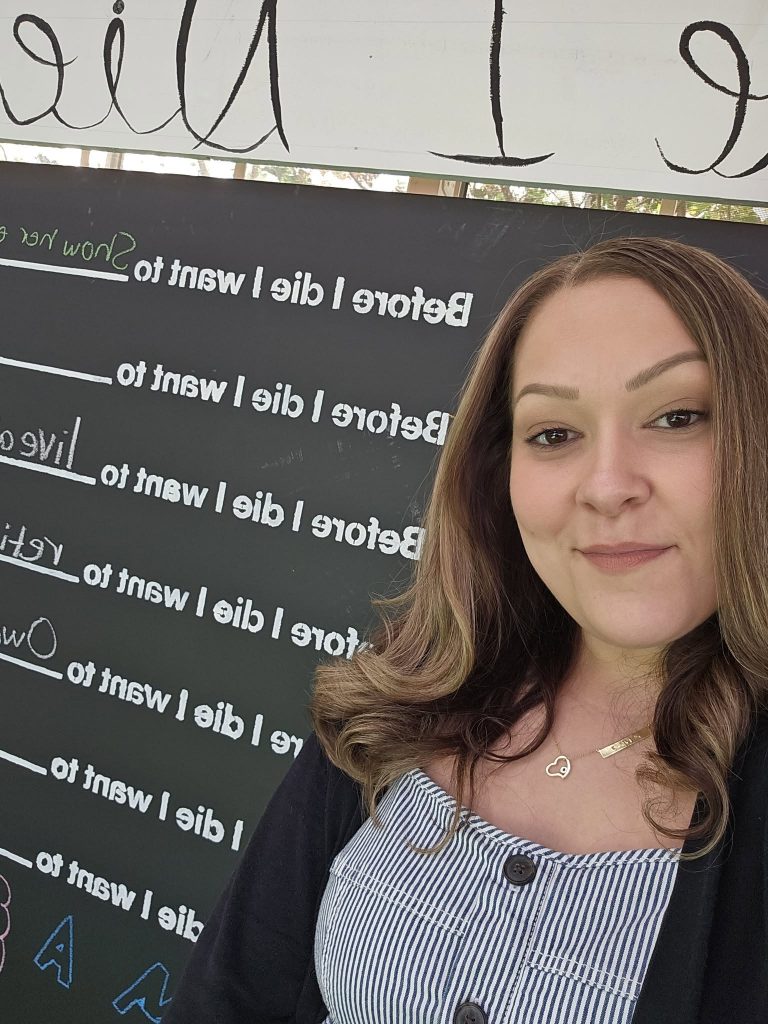
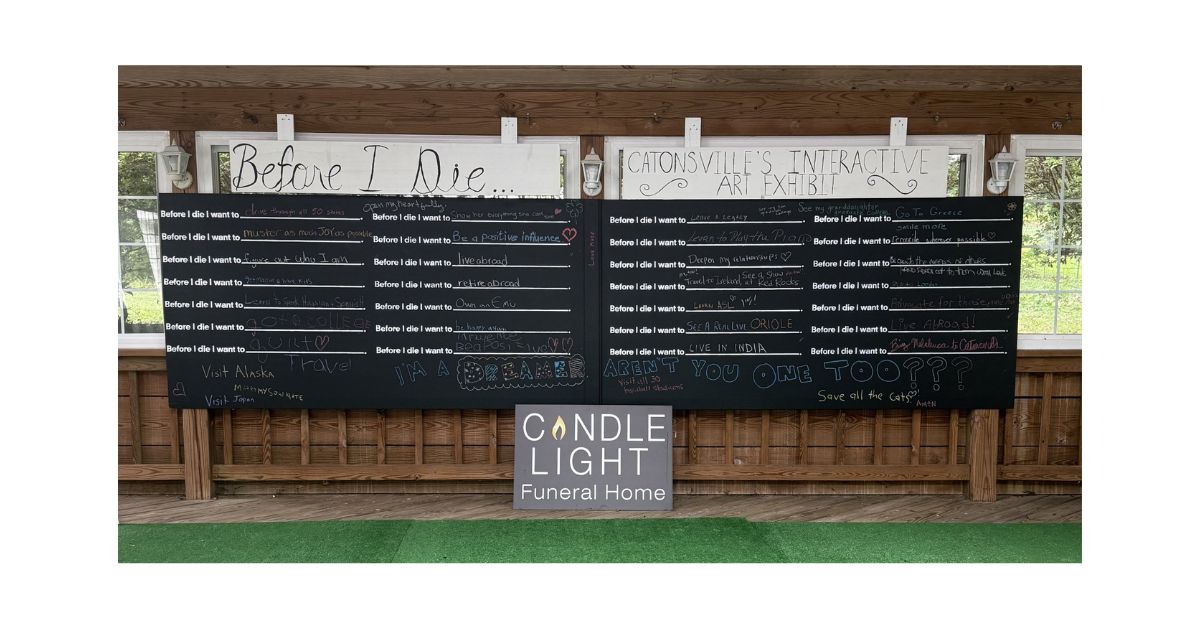
Originally created in New Orleans by artist Candy Chang following Hurricane Katrina in 2011, the “Before I Die Wall” concept uses stenciled chalkboards to invite passersby to complete a simple prompt about their life aspirations. Since then, the project has expanded across thousands of walls in dozens of countries. While most installations pop up on abandoned storefronts or city plazas, Candle Light adapted the concept for its own outdoor space.
It helped that the funeral home was a converted restaurant with an outdoor seating shelter staff refers to as the gazebo. The gathering area’s set away from the main Memorial Hall where traditional services take place.
To make the pavilion a little more inviting, they laid down astroturf, arranged comfortable outdoor seating, applied chalkboard paint to the wall, and stenciled the official prompts using templates downloaded directly from the official project resources. Directional signage now guides neighbors to the pavilion to grab lunch, play board games, or fill out the wall. Because it is situated outside near the edge of the property, visitors feel like they are enjoying an outdoor public space rather than walking into a funeral facility.
“A lot of times as a funeral director I sit down with families and they don’t know how to write an obituary, or even how to write the eulogy. A lot of times I think that we focus on the things that we achieved on paper in our life. You have these awards,” she said. “Its easy to point to your discharge paperwork and to say, ‘I’m proud of my service,’ which is that’s a beautiful thing, but I also think that a lot of our dreams, our aspirations, the things that the goals that we had for our life really speak volumes for who we are as people.”
Placing the wall directly on the property provides an unforced, organic bridge into these deeper topics. Visitors leave responses ranging from short-term bucket list items to artistic doodles and deeply emotional goals. In turn, it naturally prompts discussions about personal legacy and prearrangements in a gentle, non-sales environment.
For firms interested in launching a similar public art initiative, Nagy said maintaining the wall requires minimal upkeep. The installation took roughly two months from initial prep to launch in the spring, and it stays up through the fall (Catonsville can get snowy). When the board fills up, staff members take photographs of the entries to archive them before wiping the surface clean with basic soap and water. Daily morning checks are conducted to wipe away occasional profanity, and notable submissions are shared on the firm’s Facebook page to keep online followers engaged.
Above all, Nagy cautions that any funeral home approaching a project like this must keep its primary objective clear.
“The most important thing to remember is that you’re doing it to bring the community together. It’s not an advertisement for your business,” she said. “It’s an engaging project for the community. It’s not about bringing in more arrangements. It’s more of a connection.
She said the project’s real value is that it sparks meaningful reflection, and encourages neighbors to talk comfortably about the things that matter most.