
Longtime Selected Members Raise Concerns About Proposed NFDA-Selected Merger
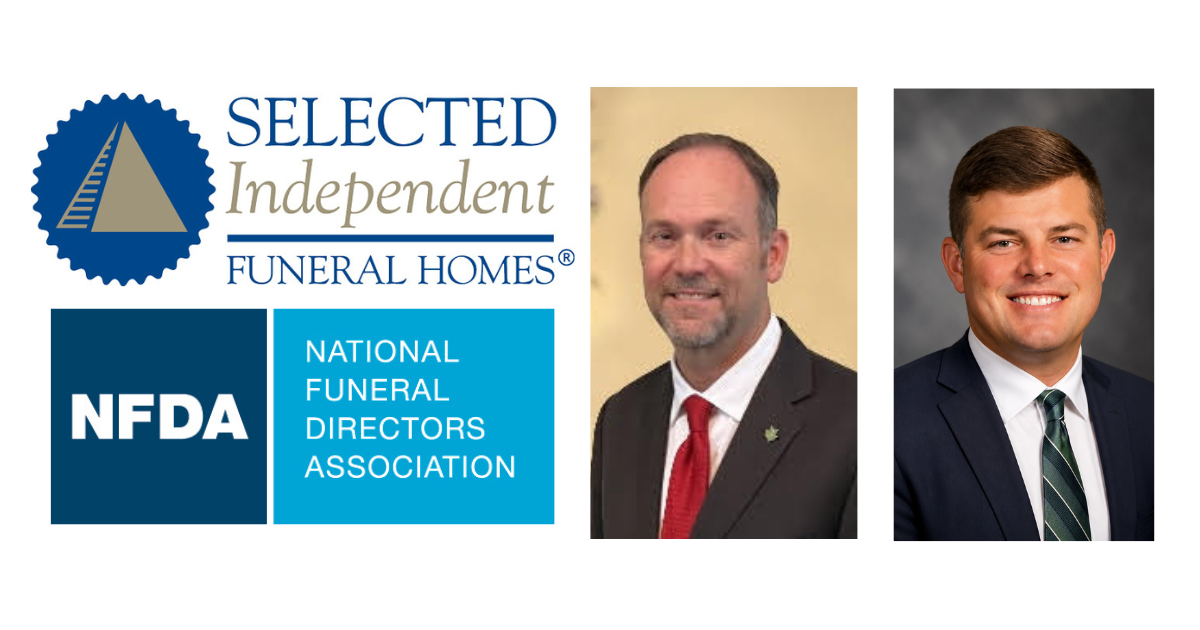
The proposed merger of Selected Independent Funeral Homes (Selected) and the National Funeral Directors Association (NFDA), which was announced to the public and to members on July 29, proves that two things can indeed be true at once. The Selected board has described the deal as a path to long-term stability. And, according to two sixth-generation Selected members, a significant portion of the membership wants no part of it.
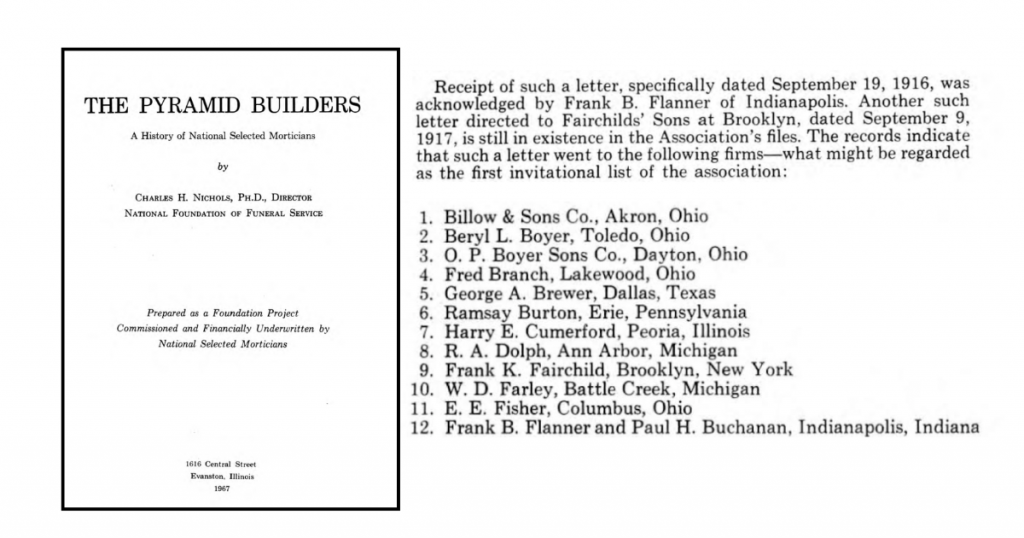
The firms led by Nathanael M. Billow, Executive Vice President and funeral director at The Billow Co. in Akron, Ohio, and Paul C. St. Pierre, CFSP, president of Wilson-St. Pierre Family Funeral & Cremation Services of Greenwood, Indiana, predate Selected itself. St. Pierre’s family is rooted in the Flanner side of Flanner & Buchanan Mortuaries in Indianapolis, one of the 25 founding firms of Selected in 1917, while Billows’ firm has been a member since 1933. St. Pierre served as president of Selected in 2020, while Billow’s father, Charles M. “Chip” Billow held the same position in 2017.
In the weeks since the merger was announced, both St. Pierre and Billow have been vocal about why they believe the proposal should be rejected when it comes to a vote in just a few weeks.
“An acquisition, not a merger”
Billow and St. Pierre’s central objection is definitional. Under the proposal, Selected would cease to exist as an independent association and become a designated community within NFDA, governed by two minority board seats and a non-executive advisory committee with no formal authority. To them, that structure — regardless of the language used to describe it — amounts to a sale, not a partnership. According to the NFDA’s public “Better Together” FAQ on the proposal, which has continued to be updated as members raise new questions, “the transaction would be structured as an acquisition of Selected Independent Funeral Homes by NFDA.”
Both men said they respect NFDA’s role representing the broader profession, and they certainly have the credentials to back up their opinions. In fact, the Billow Company has the unique position of being a founding member of NFDA in 1882.
However, they argue Selected was built for a narrower purpose: independent funeral home owners exchanging best practices under a shared code of good conduct, in an association that is, by design, selective rather than universal. That distinction, they said, is difficult to preserve once absorbed into a much larger organization — and neither man believes the board has offered assurance that it can be.
Questions about closed doors
According to Billow and St. Pierre, the Selected board and executive director spent roughly a year and a half developing the NFDA proposal without member input, a process both men said left the membership blindsided when it went public. That timeline is not in dispute — the board has acknowledged the study predates the announcement — but the two men argue it has produced a trust deficit that’s now shaping the vote itself.
They also raised concerns about access to the underlying agreement. Both said they separately requested a copy of the letter of intent between Selected and NFDA and were told by legal counsel for both organizations that the document is confidential and cannot be shared with members, even as those same members are asked to vote on it.
Informal polling brings more concerns to light
Passage of the proposal requires a two-thirds supermajority of the membership. Since the announcement, Billow and St. Pierre have been active on the association’s Forum blog, interacting with members in discussions about the proposal. They’ve also been reaching out to Selected members, finding that most also oppose the proposed agreement.
“Of the 70 firms we have spoken with, upwards of 85% have expressed a strong desire to vote ‘no’,” says Billow.
They pointed to Selected’s finances as part of the rationale: by their account, roughly 80 percent of the association’s annual budget, more than $2 million, goes toward personnel, benefits, office space, and outside consulting, while the board’s own financial modeling shows the current operating structure remaining solvent through 2029, with pressure not projected to emerge until 2030.
As an alternative to a sale, both men point to transitioning Selected’s administrative functions to a third-party association management company — a model used elsewhere in the industry — which they believe could lower overhead, and in turn, dues, without surrendering governance to NFDA. They also flagged unresolved questions about the fate of Selected’s international and Canadian members, whose standing under an NFDA-affiliated structure has not been confirmed, but will be “developed during the transition,” according to the FAQs.
Meaningful annual meeting
Selected’s leadership has framed the proposal differently. In a separate conversation, board president Barbara Risher Welch expressed confidence in the board’s process and rationale, and described ongoing outreach to the membership as “overwhelmingly positive.” The board has also said it views the current operating model as facing long-term pressure that warrants action now rather than later.
Whatever your view of the proposal, the fight itself says something about where independent ownership stands right now: the model still commands real loyalty, and members expect a say before a 110-year-old association changes hands.
A vote is expected in the weeks following Selected’s upcoming Annual Meeting September 3-5 in Louisville, Kentucky, where a town hall discussion is planned. Billow and St. Pierre hope the meeting results in a postponement of the vote, which would allow more time for members to weigh additional options for Selected’s future. Until then, the outcome — and what it means for the independents who built Selected in the first place — remains an open question.