
Catholic Diocese Issues Warning About “Irregular” Funeral Practices
Since lifting its centuries-old ban on cremation in 1963, the Catholic Church has slowly and, perhaps, reluctantly loosened its restrictions on other secular funeral practices, most of which dealt with the handling and disposition of cremains. But that’s not the only funeral trend that’s frustrating the faith, and at least one Catholic bishop has taken to YouTube to reiterate and reinforce the rules.
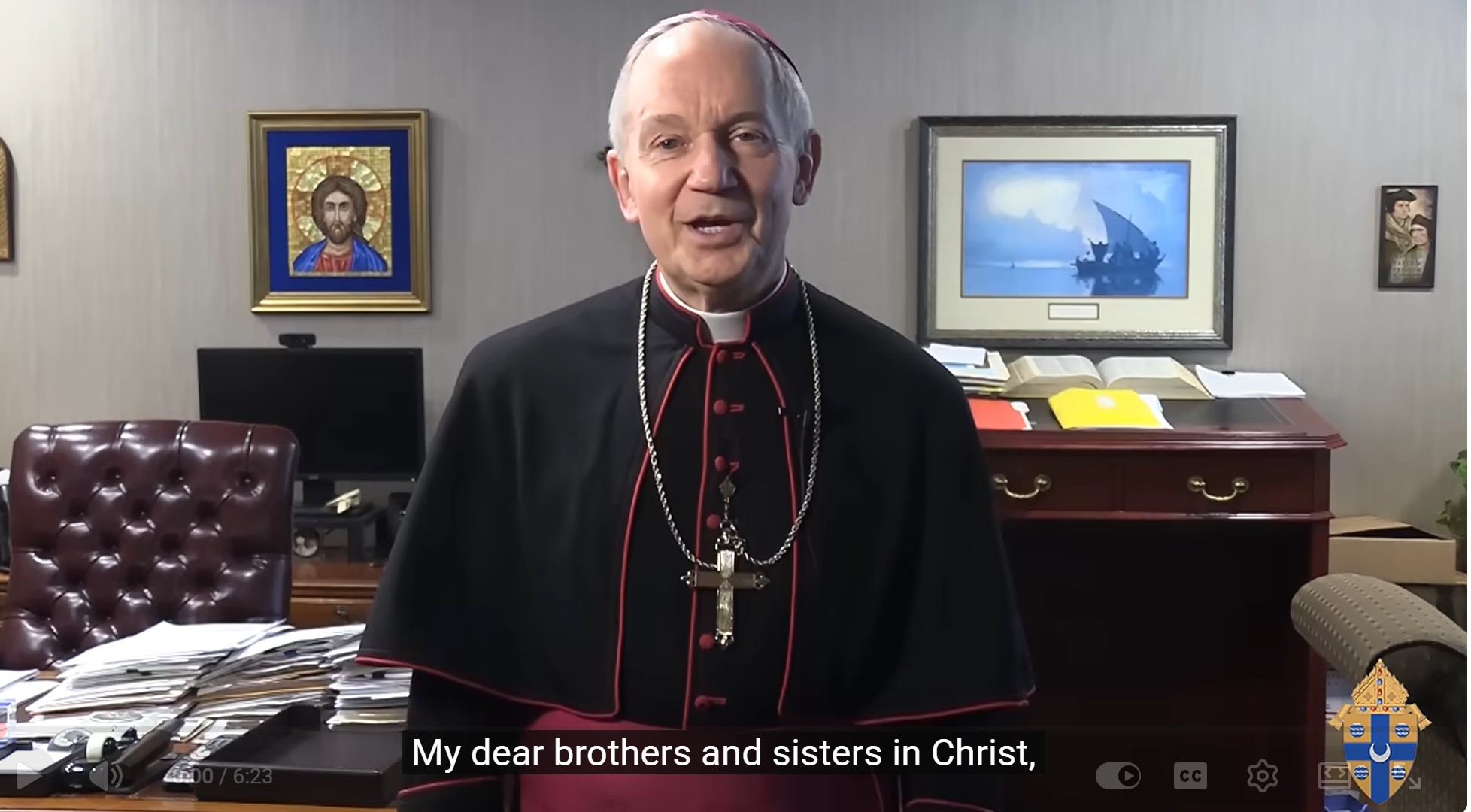
On July 1, Bishop Thomas John Paprocki, the ninth Bishop of the Diocese of Springfield in Illinois, published a six-minute video on the diocese’s YouTube channel titled, “New diocesan funeral policies to take effect July 1.”
In the video, Bishop Paprocki addresses “some irregular practices that have crept into local funeral services.” In order to adhere to the Church’s longstanding Order of Christian Funerals, Paprocki says, his diocese’s policies and procedures have been updated — and will be enforced.
Out of Order
The Order of Christian Funerals includes three distinct, yet, as the Bishop explains, “intricately connected,” rites: The Vigil of the Deceased, the Funeral Mass or liturgy, and the Rite of Committal. Each of these stations serves a specific pastoral and spiritual purpose and are intended to be followed to the letter.
For example, Catholic tradition holds that the vigil, or wake, must take place the evening before a funeral. In fact, the word “vigil” comes from the Latin “vigilia,” meaning “night watch.” In the Catholic Church, vigil prayer services are held before major feast days, during Saturday evening mass, and on the eve of funerals during visitation or viewing hours.
Practicalities like convenience, cost-savings, and scheduling constraints have condensed many modern funeral observances into streamlined, one-day events, with visitation being held for a few hours immediately preceding the funeral service. In his video, Bishop Paprocki refers to this trend as a “liturgical anomaly” that has emerged in Catholic funerals over the past few years — but that is about to change, at least in his diocese.
“As of July 1,” Paprocki says, “visitation will not be permitted in church on the day of the funeral liturgy. The vigil, by definition, is the night before, so the vigil prayers will be prayed then by the priest or deacon even if there is no public visitation. In such cases, it would be fitting at least for the immediate family members to join the priest or deacon in the vigil prayers.”
Bishop Paprocki clarifies that mourners can still gather at the funeral home prior to the funeral, where a priest can offer a prayer service called “Transfer of the Body to the Church or to the Place of Committal.” In the event a priest is not available, a funeral director, fellow parishioner, or friend may offer these prayers. He then explains the importance and symbolism of the funeral procession from the funeral home to the church as a “reminder of when the deceased person first entered the church.”
Forgetting the focus
The next “problematic area” the Bishop addresses is the practice of eulogizing the deceased with highly personalized memories, lists of accomplishments, and praise for the character. The modern eulogy, says Paprocki, “makes the person being praised the main focus of attention” rather than keeping God as the primary focus.
The new diocesan guidelines allow a reference to “how the deceased person put his or her Christian faith into practice,” but any words of remembrance that the family would like to be spoken by the priest must be submitted for approval three days prior to the funeral. Family members and friends will not be permitted to read these remarks in order to avoid “difficult situations” like becoming overcome with grief or saying things that are “very inappropriate.”
Burial is still recommended
Bishop Paprocki concludes his video with a reminder of the Church’s stance on cremation; while cremation is not strictly prohibited, burial is still the recommended form of disposition. If cremation does take place, the church requests that interment take place within 30 days of the funeral rites. He also reiterates the church’s preference that cremated remains not be “divided, separated, or interred in more than one place.” He does not, however, mention the Church’s 2023 modification that allows family members to request “a minimal part of the ashes” be kept in a sacred place of “significance for the history of the deceased person.”
It’s clear that the changes Bishop Paprocki outlines in his video were reached after thoughtful prayer as well as discussions with church leaders, parishioners, and local funeral directors, whom he recognizes for the caring and compassionate service they provide.
Similar rules in other dioceses
The Diocese of Springfield is not the only Catholic diocese to address their funeral policies in response to changing consumer preferences:
- In January 2025, the Diocese of Los Angeles updated its guidelines to re-emphasize the sequence of funeral rites, stress that delaying burial for convenience is inappropriate, and remind families that the physical body should be present for funeral rites whenever possible (including prior to cremation).
- As of December 1, 2025, the Diocese of Youngstown in Ohio no longer allows visitations in church buildings or facilities. The decision was prompted by an increase in these requests for convenience and cost-cutting. “Churches are sacred buildings intended for divine worship and not to serve as spaces for funeral visitations,” the Bishop said.
- On May 5, 2026, Bishop McManus of Worcester in Massachusetts issued a decree that addresses the “casualness with which cremains are treated,” calling out instances of Catholic families placing cremains in jewelry, using a coffee can for an urn, and scattering ashes on the water.