
Lessons to Learn From This “Misleading” Direct Cremation Ad
A UK advertising authority has banned a direct cremation company’s ad, finding that the commercial implied that more services were included than what was actually being advertised.
The Advertising Standards Authority (ASA), the UK version of the US Federal Trade Commission, last week ruled that Pure Cremation’s video, which had been running continuously since November 2024, “misleadingly implied the standard package included an in-person service, contrary to the nature of direct cremation.”
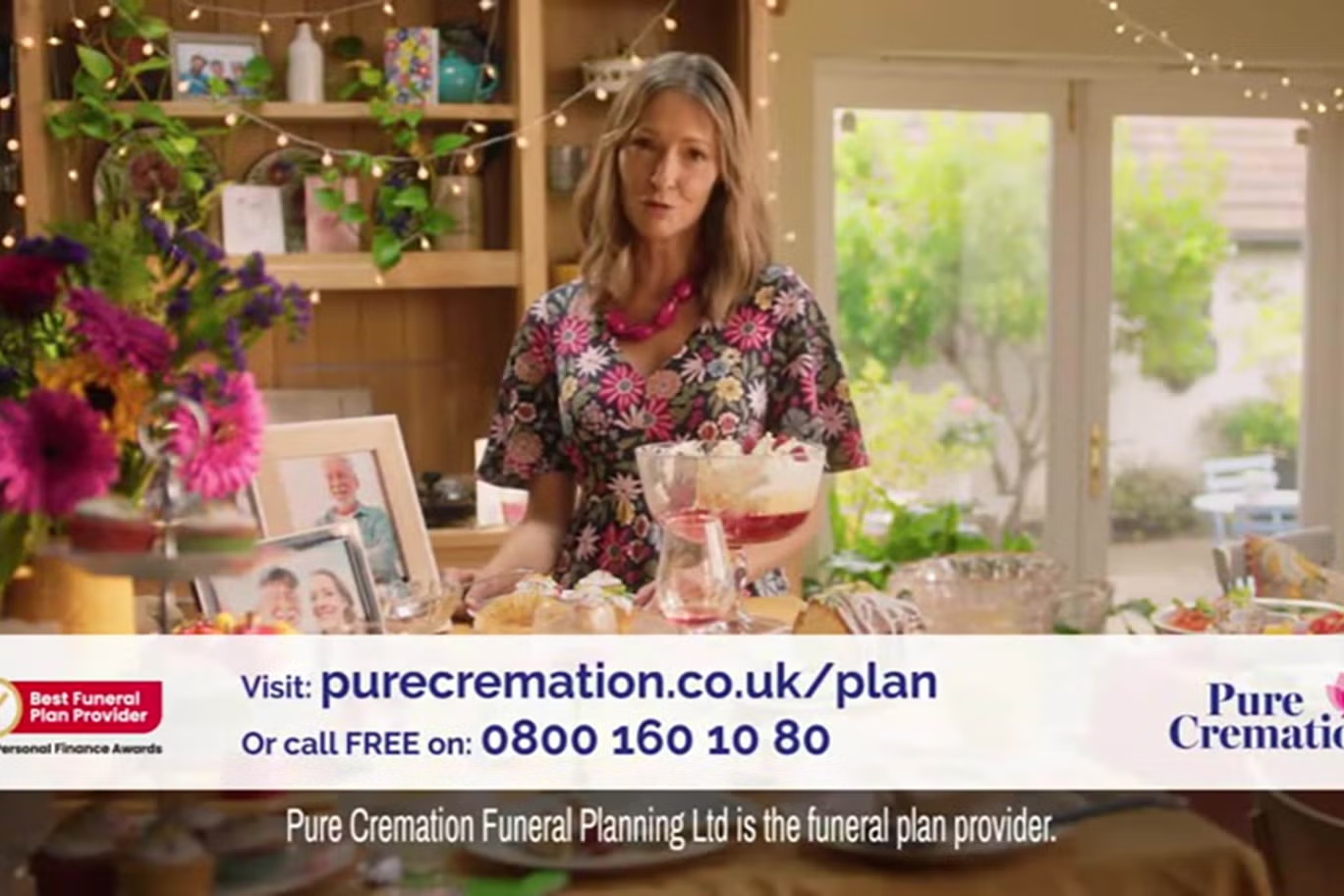
In the ad, a woman stands behind a table laid out with drinks and party foods in a room decorated with string lights, flowers, and framed photos, presumably of the woman’s deceased dad. She speaks directly to the camera as she describes how happy her dad would be that the family saved money by choosing Pure for his direct cremation services.
Although it seems pretty straightforward on the surface, the ad garnered 12 complaints from consumers who felt that several aspects of the ad were misleading.
Pure Cremation has revised the video accordingly, and it doesn’t seem that the company suffered any fines or legal damages other than the ban. Even so, the brand may have suffered some dings to its reputation thanks to the controversy. For example, after the ASA’s decision, the BBC published an article titled “‘’My mum was misled by online cremation company’”, in which they link the ad story to a woman’s misunderstanding of her mother’s preneed arrangement with Pure Cremation.
This story may have taken place on a different continent and under the auspices of a different government authority, but Pure’s misstep offers several advertising-related reminders for deathcare professionals from this side of the pond:
1. All words matter
The ASA commented that when the woman described the crematorium as “beautiful” and the cremation as “dignified,” she implied that she “had some basis on which to reflect the experience directly, and therefore that some form of attended ceremony or service had taken place, for which she had been present.” They also remarked that the term “funeral plan,” which the woman used several times, sent the wrong message. The lesson here is that word choice is crucial to the way an audience interprets the entire message. Not only do you have to get the legal language right, but you also have to be careful that your words won’t lead the viewer or reader to think or picture something other than what you’re trying to say.
2. Images tell a story, too
Pure Cremation intended the audience to understand that the home setting and table full of half-eaten trays of food and empty glasses depicted a celebration that occurred separately from the cremation itself, and that it wasn’t connected with the crematorium at all. However, the ASA “did not consider it was sufficiently clear from the ad that the private celebration was in place of, rather than in addition to, any attended service at the crematorium.” I’ll also add that with so many funeral homes and crematoriums leaning into decor that mimics the comforts of home, it can be pretty difficult to discern whether the setting in this commercial is a private house or a family room or reception area at the facility. Pick your settings carefully; they tell their own story.
3. Sometimes fine print isn’t enough
The ASA acknowledged that Pure Cremation’s disclaimer “stated that a service or ceremony at the crematorium was not included,” but said it wasn’t enough to “override the overall impression created by the language” of the ad. While the language of legal disclaimers is crucial, the way they’re presented is also important. Sometimes asterisks and fine print alone just don’t cut it; in this case, the statement needed to be communicated more clearly and perhaps even in several different ways.
If you’d like to see the original banned ad for yourself, YouTuber Sam Harry Emmerson has posted it at 2:36 in this compilation video.