
Group Grief: Emotional Contagion in Shared Sorrow
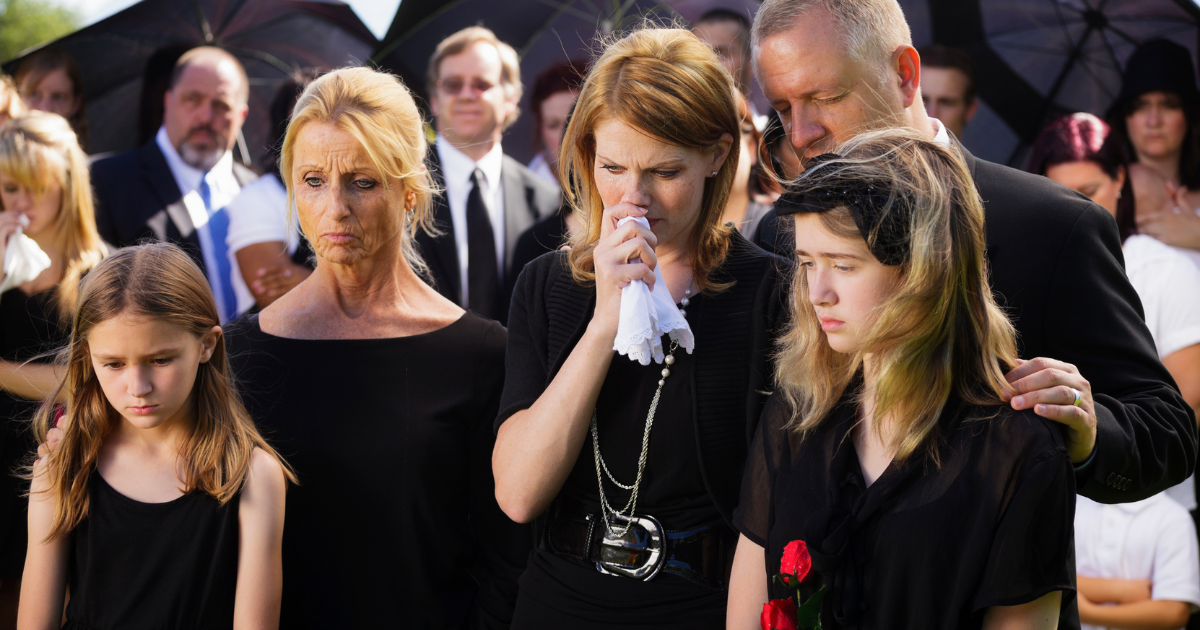
In emotionally intense situations like funerals, demonstrations of grief can move through a crowd like a wave. The stronger the despair of others, the more likely those nearby are to respond in kind, as if sorrow or tears were contagious.
This is, to most people, as it should be — we expect to align to each other emotionally. A sense that our feelings are automatically shared by others is a core component of human identity. We just know, without even trying, the rending pain behind a mother’s wail of grief. And we often respond compassionately, in kind, with tears of our own, for their suffering.
Empathetic Grieving
Empathy, which is closely influenced by compassion, is a powerful biochemical state with a big role in human socialization.Through empathy we make sense, in an immediate and personal way, of the emotional experiences of others. Empathy supplies us with an essential understanding, one that creates a sense of shared connection between individuals. It allows us to instantly communicate emotions, conveying like a language based in sensation only, wordless and unspoken, simply by consulting our own hearts.
Because such emotional realities are written there. Screaming, sobbing, wailing in grief, and even uncontrollable laughter can precipitate the firing of an empathic response process elaborately and precisely wired into the brain, partly on specialized hardware. ”Mirror neurons” are brain cells in areas underlying emotion, empathy, and social engagement, and motor function . These specialized cells activate in emotionally intense conditions, responding to the actions of others, and they fire the same way when we perform the same actions ourselves. Mirror neurons play a role in learning new motor skills, such as sports, and when we unconsciously mimic the facial expressions of others. They’re also involved in other behavioral and thought processes.
Nature or nurture?
In 1949, Psychologist Donald Hebb hypothesized that neurons could strengthen their connections (the “hardwiring” of neuronal networks) through repetition. When adjacent neurons are activated together repeatedly through performance of the same action, Hebb posited, they “get used to” firing together, will fire together more easily the next time and, with repetition, more firmly establish a network that performs with greater efficiency over time.
Such Hebbian learning, also known as the “cells that fire together, wire together” principle, forms the basis of one view of the mechanism underlying shared emotional states. And indeed,mirror neurons demonstrate such strengthening of network “eloquence” through repetitive trainingsuch as when building ability in a particular sport.
Our neural systems are primed to reflect the emotional realities of others, but it’s the sharing of experiences that helps us to more solidly refine our abilities to step into their emotional experiences with them. Through witnessing, comforting, and responding ,the pathways we build strengthen and become more powerful, along with our human connections.