
Why Brands Like Titan Casket & Liquid Death Are Changing the Death Conversation
Death Is Having a Brand Moment, And Funeral Homes Should Be Paying Attention
For decades, deathcare has operated in the shadows.
Quiet. Reserved. Reactive.
And then a canned water company and a direct-to-consumer casket brand decided to drag death into the cultural spotlight, and the internet loved it.
If you’ve been watching the recent back and forth between Liquid Death and Titan Casket, you’re not just watching a marketing stunt.
You’re watching proof.
Proof that consumers are not afraid of death content.
Proof that culture will engage with mortality if you package it right.
Proof that deathcare is not taboo. It’s untapped.
And that should make every funeral home in America lean forward.
Liquid Death: Making Mortality Mainstream
Liquid Death built a billion dollar brand selling canned water with skulls on it. The entire company is built on the aesthetic of death. Dark humor. Metal vibes. Irreverence.
But they didn’t stop at branding.
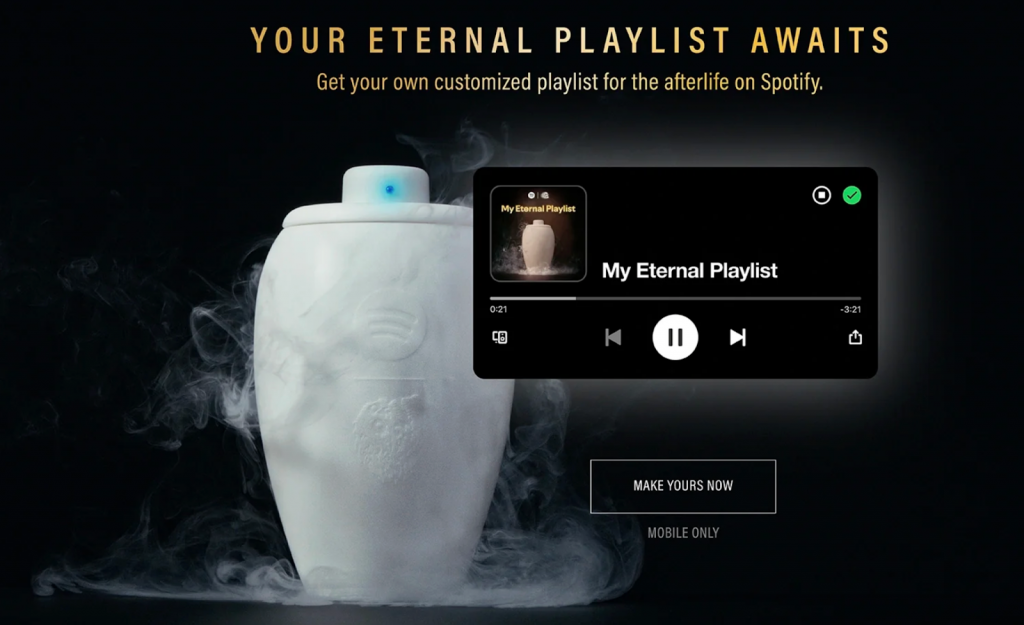
They partnered with Spotify to launch a Bluetooth-enabled urn called the “Eternal Playlist Urn.” You can literally stream your music from your loved one’s resting place.
Absurd? Yes.
Viral? Absolutely.
Culturally relevant? Without question.
And here’s what matters:
The internet didn’t revolt.
They didn’t say, “This is disrespectful.”
They shared it. Commented. Tagged friends. Bought into it.
Consumers are not fragile about death. They’re curious.
Titan Casket: Culture x Commerce
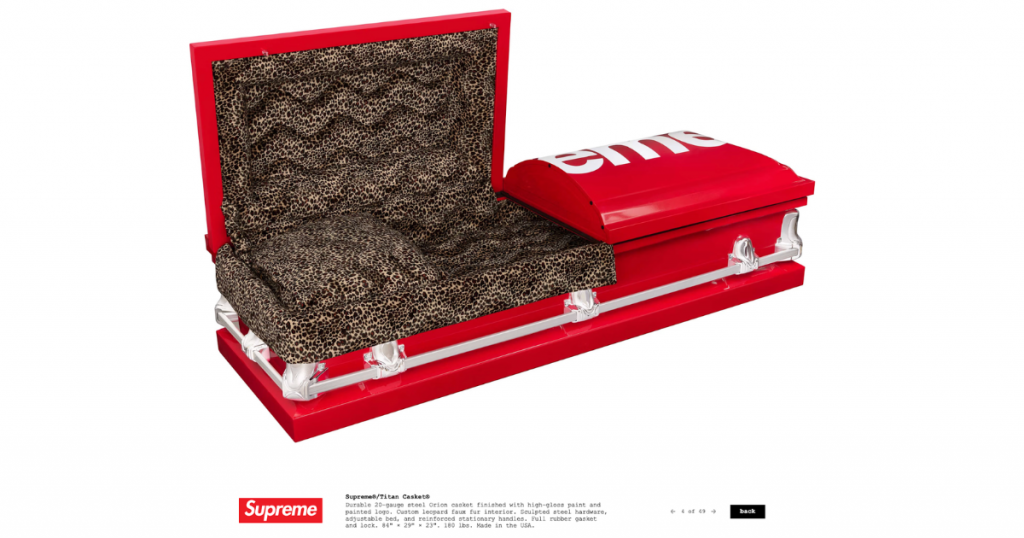
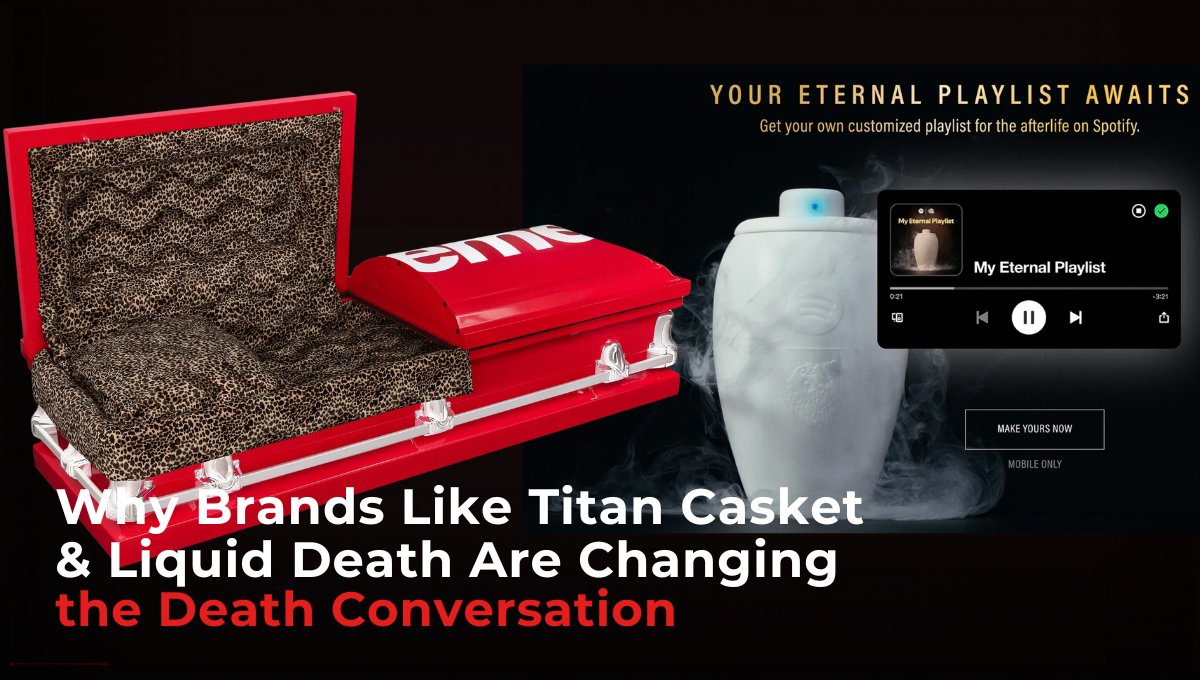
Then Titan Casket, a serious player in the deathcare space, partnered with Supreme.
Let that sink in.
A casket company.
Partnering with a streetwear juggernaut.
Red lacquer. Chrome hardware. Supreme logo stretched across the lid. Leopard interior. Loud. Confident. Intentional.
It wasn’t designed to sit quietly in a showroom.
It was designed to start a conversation.
And it did.
Deathcare content showed up in sneaker feeds. Fashion blogs. Culture pages. Comment sections filled with people who never would have engaged with a funeral brand otherwise.
Again, no outrage mob. No cultural rejection.
Just engagement.
What This Actually Proves
Here’s the uncomfortable truth:
The only people treating death like it’s untouchable are most funeral homes.
Consumers are watching Netflix documentaries about serial killers.
Listening to true crime podcasts daily.
Buying skull branded merch.
Laughing at dark memes.
But funeral homes? Still posting sympathy graphics and holiday reminders.
Meanwhile, culture driven brands are racking up impressions using your category.
Titan Casket and Liquid Death didn’t “disrespect” deathcare.
They normalized it.
They made it part of everyday culture.
And the overwhelming response has been curiosity, humor, and most importantly, attention.
Meanwhile Some Funeral Homes Are Quietly Winning
This isn’t just a product company phenomenon.
There are funeral homes absolutely crushing content right now because they understand one thing:
Visibility beats invisibility.
Lynch-Green Funeral Home
They lean into authentic storytelling. Behind the scenes content. Real faces. Real moments. They’re not hiding. They’re humanizing.
Wagner Elfner & Burg Funeral Home
Their content has reached millions. Not thousands. Millions. Educational, approachable, visible. They show up consistently and they’re not afraid of the algorithm.
Coleman Taylor Funeral Services
They’ve built connection through community centered content that feels accessible, not corporate.
None of these funeral homes are being edgy for the sake of being edgy.
They’re just visible.
And visibility changes perception.
The Consumer Curiosity Is Already There
Here’s the bigger strategic insight:
Death is one of the only universal human experiences left.
Everyone dies.
Everyone grieves.
Everyone plans or avoids planning.
That makes deathcare one of the most inherently interesting categories in existence.
The reason it hasn’t felt that way historically isn’t because consumers don’t care.
It’s because the industry hasn’t created engaging touchpoints.
Liquid Death didn’t create curiosity about death.
They tapped into curiosity that was already there.
Titan didn’t force culture to care about caskets.
They gave culture something bold enough to react to.
Funeral homes don’t need to copy the antics.
But they absolutely need to recognize the opportunity.
What Funeral Homes Should Take From This
This is not about selling Bluetooth urns.
This is about mindset.
- Stop assuming consumers don’t want to talk about death.
They do. They just don’t want it delivered in outdated brochure language. - Stop being invisible online. If a canned water brand can dominate death aesthetics on Instagram, your funeral home can show up with authority in your own market.
- Start creating content that educates and demystifies. What actually happens at a crematory? What does pre-planning really look like? What myths do families believe that aren’t true?
- Lean into personality. The funeral director as a trusted, approachable guide, is powerful. The silent institution is not.
- Play offense. If culture is talking about death, you should be in the conversation.
The Bigger Shift Happening
We are witnessing something bigger than a brand battle.
We are watching deathcare move from taboo to trending.
From hidden to visible.
From whispered to shareable.
And here’s the strategic bombshell:
When culture normalizes death conversation, funeral homes that are already visible win disproportionately.
Because when a family eventually needs a funeral home, they won’t choose the one they’ve never heard of.
They’ll choose the one they’ve seen.
The one that educated them.
The one that didn’t hide.
Titan Casket and Liquid Death are proving something the industry should have realized years ago:
Death content is not a liability.
It’s leverage.
The question is simple.
Will funeral homes let culture brands dominate the death conversation?
Or will they step into it themselves?
The consumer is already ready.
The only thing left is whether funeral service is.
——————-
Learn how DISRUPT Media helps funeral home become impossible to ignore.