
Dehumanizing the Dead or Digital Immortality?: The Ethical Dilemma of Resurrecting Deceased Actors With AI
Val Kilmer, who died in April 2025, will appear in the upcoming independent film As Deep as the Grave as Father Fintan, a Catholic priest and Native American spiritualist — not through archival footage, but through generative AI. The filmmakers had originally cast Kilmer years before his death, but he was too ill from throat cancer to make it to set. Rather than recast the role, director Coerte Voorhees turned to state-of-the-art AI to realize his vision, using images, voice simulations, and data points. The result is a performance that never happened, but it is being presented to audiences as if it did.
A growing trend
This is not the first time Hollywood “resurrected” a deceased actor for the sake of cinema. In 2016, Peter Cushing, who died in 1994, was reconstructed as Grand Moff Tarkin in Rogue One: A Star Wars Story using a body double and sophisticated facial mapping. Carrie Fisher was digitally recreated for scenes in The Rise of Skywalker after her death in 2016. Paul Walker’s brothers stood in for motion capture to complete his performance in Fast & Furious 7. Harold Ramis returned as Egon Spengler in Ghostbusters: Afterlife. Even Marlon Brando and Audrey Hepburn have been pulled from the archive to sell movies and chocolate, respectively.
Kilmer’s posthumous appearance may be the most seamless integration of all; the explosive evolution of artificial intelligence means it’s easier than ever to bring back an artist from the dead without body doubles or holograms.
A question of consent
The producers of As Deep as the Grave were careful to secure the cooperation of Kilmer’s estate, and his daughter Mercedes has publicly expressed support, noting that her father was a deeply spiritual man who embraced emerging technology as a storytelling tool. The production also followed SAG guidelines and compensated Kilmer’s estate for his appearance. By Hollywood’s current standards, this is the ethical version of digital resurrection.
But this does bring up some questions about consent and ethics. Kilmer himself did not consent to this, and, of course, he’s not here to critique the final cut and be sure his likeness was captured faithfully. During his lifetime, Kilmer partnered with a voice technology company to recreate his speaking voice for Top Gun: Maverick, saying he was grateful for the chance to communicate authentically after his throat cancer made speech difficult. That was his decision, made while he lived. Posthumous AI performance is something categorically different — it is creation without the creator’s active participation or approval.
The families of the deceased are not the deceased. They love them, they knew them, and they carry their memory, but they are also grieving, and grief can shape decisions in ways that are not always about the person who died. Deathcare professionals know this better than anyone.
Comfort or creepiness?
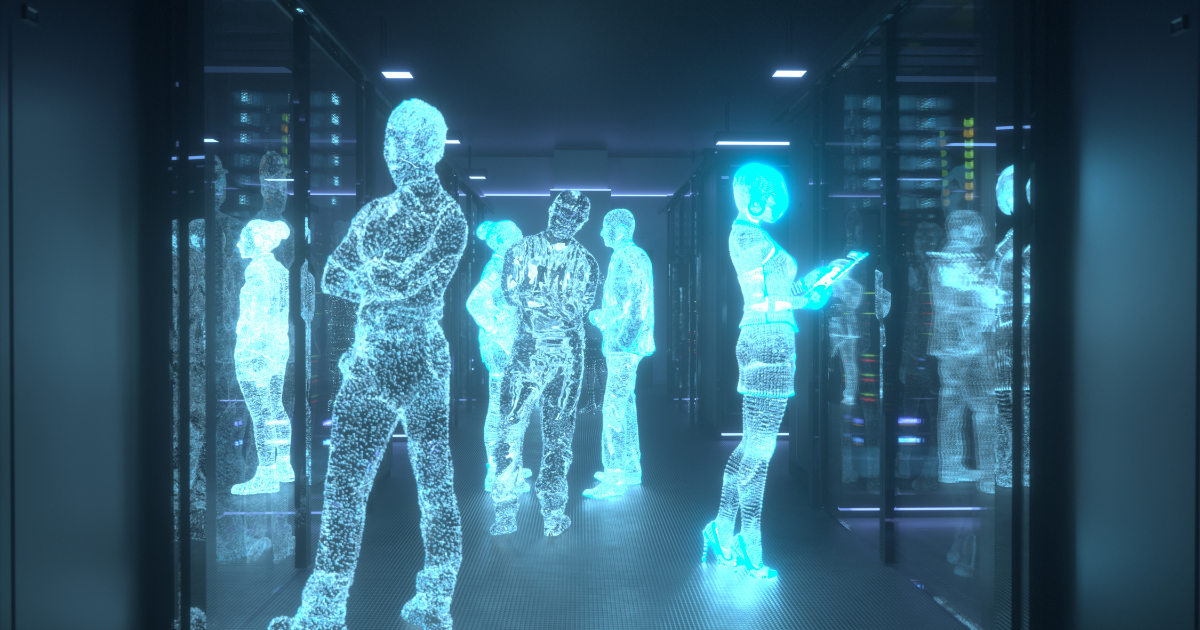
Just a few years ago, the digital resurrection of a person who had passed away was (literally) something from an episode of Black Mirror — just the thought of interacting with an electronic, non-human version of a loved one was considered creepy, psychologically dangerous, and even a little dystopian. Today, though, the same technology that is bringing Val Kilmer back to the big screen is readily available to everyday people.
Just a few weeks ago, Connecting Directors readers learned about Pantio, a new tool that facilitates voice conversations with a beloved, deceased loved one. Earlier, similar technologies — which have been collectively dubbed as “griefbots” or “deathbots” — have allowed survivors to text with a dead family member. Even before that, genealogy companies offered users the option of bringing a photographic image “back to life,” animating individuals captured (even for over a century) in still images and simulating their smile, head and eye movements, and even making them interact with others in the photo.
In 2023, S.J. Velasquez of the BBC explored the ethics of Hollywood’s use of AI and computer generated imagery (CGI) to bring James Dean back to the big screen in a movie called Back to Eden. Dean, if you will recall, died in a tragic car accident in 1955. Among other practical concerns like who would benefit financially from the digital resurrection of a long-dead actor, Velasquez questioned how this technology could be monitored to prevent its unethical use as “deepfakes”. For example, someone with these tools could easily manipulate a person’s likeness to show them in compromising positions or committing a crime.
Ordinary people
As Velasquez disclosed, several states have “right of publicity” laws that protect the deceased from exploitation, but those laws are usually only applied when a celebrity or public figure is involved. For regular folks, there are few, if any, such protections.
With cutting-edge options for AI resurrection becoming easier and more accessible, what role should deathcare professionals play in the support or promotion of these tools? Are they helping the families you serve to navigate grief through continuing their bonds with deceased loved ones, or are they doing more damage by making it more difficult to let go? We aren’t the only ones with questions. Hopefully, the answers will become just as readily available as the tools that prompted them.