
To View or Not to View: Psychological Effects of Closed Caskets
A family’s decision of whether or not to view the deceased can be complex. Cultural considerations of both the dead and their loved ones feature significantly, as do expectations of any children attending, sensitivities of survivors, the manner of death, and possibilities for restoration. Worldwide, viewing remains a relatively common practice, the body itself on display; many swear by the experience of visiting an open casket to “say goodbye.”
Though it may seem counterintuitive, there are real psychological benefits to mourning in the presence of a body; to seeing and even touching a deceased loved one. But what do we really understand about the psychological impact of not viewing a body?
Displaying our dead
Witnessing lifeless remains up close, first-hand, allows for a specific kind of closure unavailable by any other means. Research appears to support this: seeing and touching the dead helps mourners reframe the relationship and begin to accept the death.
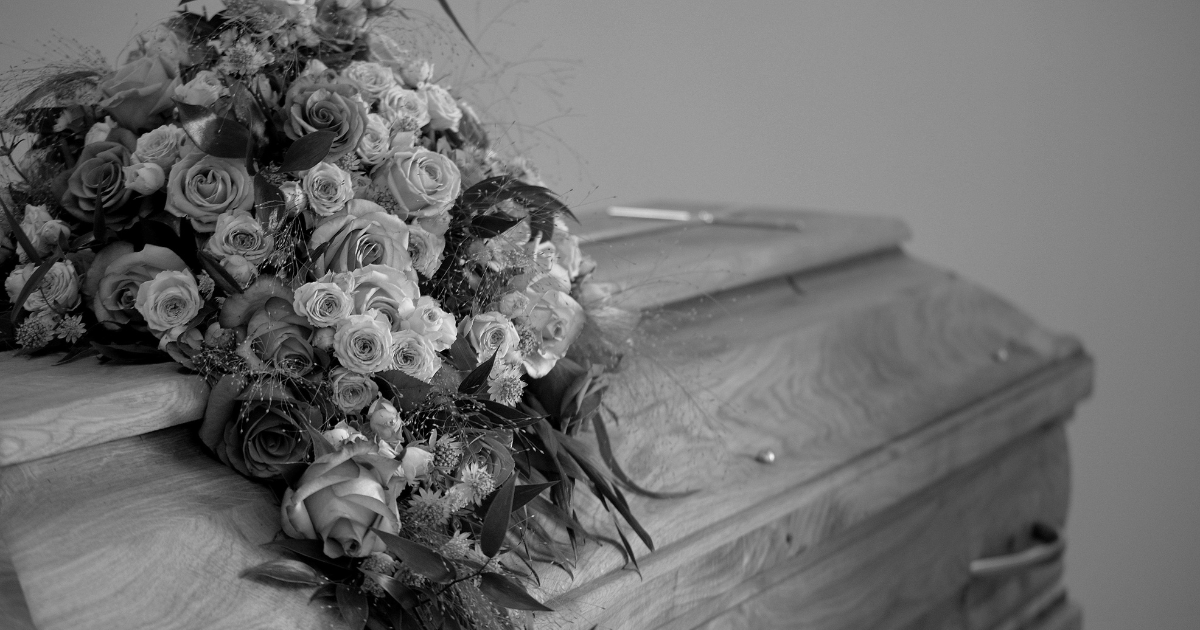
American psychologist J. William Worden, formerly of Harvard Medical School, in his book Grief Counseling and Grief Therapy, addresses the power of what’s often described as ‘sensory confirmation.’. His “four tasks of grief” focus on helping survivors accept the reality of the death and dispel the sense of unreality that so often accompanies it, particularly in sudden losses. Even a closed casket, however, can play an important role in a funeral service or memorial service.
During the pandemic, many died in isolation, with loved ones unable to be nearby either before or after death. Social distancing essentially eliminated our collective mourning rituals, with psychologically debilitating effects for many. Even a closed casket was an impossibility, and virtual services left much to be desired; we have seen, clearly, the damage to our mental health and capabilities to grieve caused by being denied final moments with our lost, the opportunity to mourn them in person.
So is a closed casket a “bereavement misstep?”
Not at all.
So far, medical science aligns with what experienced professionals have long understood: there’s no single, universally applicable benefit that holds across every death for every mourner. Each situation has unique context: religious beliefs (of both the deceased and the survivors), cultural expectations, and the wishes of the deceased themselves, primarily. Add to that the manner of death, the realities of embalming and restoration, time since death, and the conditions in which the body was found, and you’re halfway there. Then there’s the other half of the equation — the viewer.
Open caskets don’t guarantee clean psychological resolution, and neither do those that remain closed. For some mourners, the presence of the body anchors the reality of the loss while for others, the experience of seeing their loved one’s remains can be overwhelming.
What matters is how the loss becomes real… whether through direct contact, or more gradually, through memory and time, absence and the slow work of adjustment will allow the loss to settle until each death becomes part of our lives.