

Lucky Charms & Slanted Headlines | 4M #231
Welcome to the two-hundred-and-thirty-first edition of Morticians’ Monday Morning Mashup, 4M #231, where we’ll serve up bite-sized, easily-digestible nuggets of the deathcare news you need to crush conversations in the week ahead. Bon appetit!
Third time’s the charm?
Last week two states publicly renewed their interest in legalizing natural organic reduction (NOR) — and we’re crossing our fingers that the bills will make it across the finish line. While Ohio Senate Bill 323 was first introduced in November, this is the third time Massachusetts Bill H.2444 has been through the legislative process. Currently, 14 states have passed NOR laws, and bills have been introduced in at least 15 more.
From Coast to Coast, Funeral Homes Trust TMCFunding

Trusted by funeral homes and communities across the U.S., Treasured Memories® Community Funding is the leading crowdfunding platform designed specifically for our profession. With over $1 million raised and zero platform fees, it allows families to create meaningful memorial and support funds without added financial burden. Funeral directors stay at the center of the process — offering help, dignity, and guidance when it matters most.
Gotta love the press
Have you ever noticed that two different news outlets might report on the same event in completely different ways? I know it’s hard to believe, as journalism is supposed to be “just the facts, ma’am,” but … it happens. A great example is shown in the various headlines regarding the approval of alkaline hydrolysis in Scotland:
- “Scotland opens door to environmentally friendly water cremation”
- “‘Water cremation’ funerals where bodies are LIQUIFIED and flushed down a drain allowed in Scotland”
- “Scotland becomes first UK country to legalise water cremations”
- “Boiling ‘dead bodies’ in a bag is an eco-friendly funeral, and THIS country is starting them this year”
Now that’s love
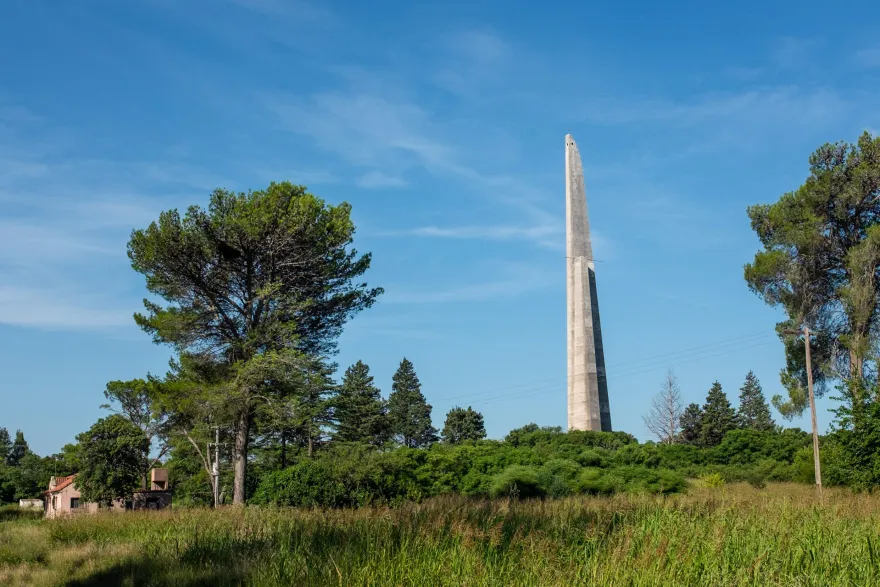
Sometimes, it just does a heart good to hear a beautiful love story, and this one from SwissInfo.ch fits the bill. In 1924, 19-year-old Rosa Martha Rossi left her parents’ middle-class household in Switzerland to spend a year in Paris. There, she captured the attention of an eccentric Argentinian millionaire, who changed her name and promised to make her dreams come true. One of these dreams came to fruition in 1931, when Rosa (now Myriam) became one of the first women to obtain a pilot’s license in Argentina.
Sadly, just a few weeks later, she was killed when her plane crashed during an ambitious sightseeing flight. To honor the life of his late beloved, the millionaire constructed a 269-feet-high airplane-wing-shaped concrete mausoleum and, in 1936, transferred her remains to the structure. Thousands attended the opening of the monument, which he named El Ala (“the wing”). Ninety years later, the obelisk still stands in a field near Cordoba, where the light at its tip is visible from up to 37 miles away.
Deathcare docket
It was a busy week for bad funeral directors and cemeterians — or, more accurately, funeral directors and cemeterians who did bad things:
- Former Indiana funeral home director arrested in Maine for allegedly stealing over $500K for prepaid funeral arrangements
- Blair County funeral director’s license suspended after alleged misconduct
- State audit finds ex-employees of local cemetery owe over $18K for improper compensation, late fees
- Funeral home director was warned over handling of Wayne County case
- Funeral director accused of operating without a license to testify in front of grand jury
The Tesla of cremators?
A pet crematory in Michigan has successfully installed what is believed to be the “nation’s first fully electric pet cremation system.” EverGreene Pet Cremations purchased the system from a company in the Netherlands, which built and shipped the machine to the Westland facility, which is about 17 miles west of Detroit. Owner Nomi Greene told the Detroit Free Press that she chose to provide this 4- to 16-hour all-electric process, which uses heat, water, and potassium hydroxide rather than flames, because it falls “in the middle” of traditional cremation and aquamation as a “green” alternative.