

This Article was Originally Published on Foxnews.com
After Carolyn Jacobi visited her father’s grave in 1995, she walked away angry and disgusted — and determined to dedicate the rest of her life to bringing dignity to the dead.
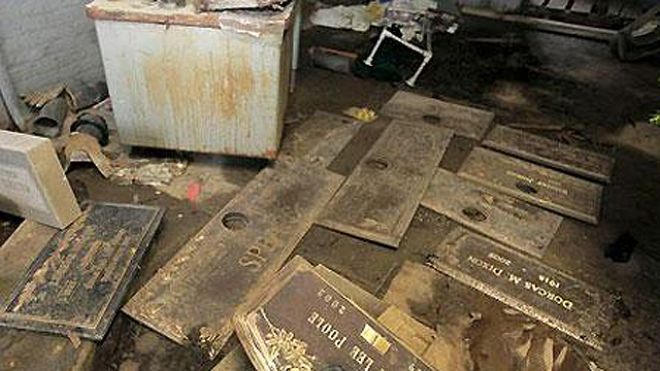
The conditions at Mount Auburn Cemetery in Baltimore, where her father, James Williams, lay buried alongside other distinguished African-Americans and prominent Marylanders, were so deplorable that Jacobi couldn’t even locate his headstone. But nothing prepared her for what she discovered that November day: A human skull believed to be her father’s was sticking up out of the ground, loosened by Jacobi’s stomps of frustration.
“I went berserk, as it could be expected,” she told FoxNews.com. “I lost it. That was the catalyst for my movement.”
Jacobi, 74, founded Eternal Justice, a watchdog of the death care industry, in the hope that she could bring accountability to a poorly regulated industry and peace of mind to those who bury loved ones.
Seventeen years later, she said, Mount Auburn — which was added to the National Register of Historic Places in 2001 — has come a long way, but the cemetery industry as a whole has a long way to go. Across the nation, cemeteries have been sanctioned and sued for dumping the dead in mass graves, misidentifying remains and charging the bereaved big bucks for services never delivered.
The most shocking case in recent years was in Chicago, where operators of the Burr Oak Cemetery were charged in 2009 with digging up bodies and dumping them in mass graves so they could resell their plots.
Recently, Ohio Attorney General Mike DeWine filed a lawsuit in January accusing The Serenity Group, which operates Floral Hills Cemeteries in Chillecothe and Circleville, of taking advance payment for grave markers that were never produced.
“Dealing with the death of a loved one is difficult, and consumers shouldn’t have to worry that their cemetery won’t live up to its promises,” DeWine said at the time.
And in Linden, N.J., the Rosehill Cemetery was sued for $25 million in July by two New York sisters who discovered the gravesite they had been visiting for more than two decades was not their mother’s plot.
“It’s a sin,” Mark Crawford, the sisters’ attorney, told FoxNews.com. “They still don’t know exactly what’s going on.”
Advocates like Jacobi and Joshua Slocum, executive director of the Funeral Consumers Alliance, say horror stories such as those are all too common. They point to a lack of federal oversight, a “patchwork quilt” of regulation among states and no standardized record-keeping as key hurdles to reforming the industry.
“A lack of due diligence is the cause of the bulk of these problems, as well as a lack of oversight,” Jacobi told FoxNews.com. “And where there is oversight, it’s very superficial. Greed steps into the picture and they are interested in increasing their bottom line. It sounds cold, but it’s true.”
Americans spent more than $15.2 billion on funeral and cemetery expenses in 2007, including $3.3 billion on cemeteries and crematories, according to the U.S. Census Bureau’s Economic Census. With 2.4 million Americans dying each year, that equates to big business.
Slocum, who has testified before Congress on the issue, most recently in 2009, said a typical burial — not including funeral home costs or a headstone — can cost anywhere between $2,000 to $4,000. Factor in the cost of headstones, which can be as lavish as a buyer wants, and the price tag can soar, he said.
“It really shouldn’t be that difficult for our elected officials to take this seriously,” Slocum said of the need for widespread reform. “Grieving people are a bigger constituency than they know. Failing to deal with it will only continue to ensure that this problem gets worse and worse and worse.”
During the 1980s and 1990s, dozens of cemeteries nationwide that had been owned and operated by local companies were bought by large conglomerates like Service Corporation International and Stewart Enterprises, Slocum said. A lack of accountability and effective oversight since then has left the industry poorly regulated, he said, adding that about half the states in the U.S. have no comprehensive regulation.
“It’s amazing to me that there’s no movement on this,” he said. “This is a subject people do not want to talk about, period. This flies under the radar until a scandal erupts.”
Jacobi and Slocum are calling for action on H.R. 900, also known as the Bereaved Consumer’s Bill of Rights Act of 2011. The bill, sponsored by Rep. Bobby Rush, D-Ill., would direct the Federal Trade Commission to require all cemetery, crematorium and mausoleum owners to provide clear disclosures about the products and services they sell, including items such as pre-need contracts, memorials, burial rights, grave liners and vaults.
“Most certainly, there are still major regulatory gaps,” a spokesperson from Rush’s office wrote FoxNews.com in an email. While funeral homes have been regulated by the Federal Trade Commission for decades, the burial business is “regulated asymmetrically,” according to Rush’s office.
Robert Fells, executive director and general counsel of the International Cemetery, Cremation and Funeral Association, said cemeteries and funeral homes are best regulated at the state level. Citing the recent scandal at Dover Air Force Base, where service members’ cremated remains were dumped in a landfill, Fells questioned the federal government’s track record in the interment business.
“On what basis would the federal government come in and regulate this industry?” Fells asked. “We looked at this [bill] and its open-ended language and said we can’t support this thing.”
Fells said funeral homes are regulated by the FTC’s Funeral Rule because the federal agency found substantial evidence of widespread abuse in that industry. But no similar finding has been made with regard to cemeteries, crematories, monument dealers or related businesses, he said.
“It really is a solution looking for a problem,” Fells continued. “They use a sledgehammer where a fly swatter will do the job.”
ICCFA, founded in 1887, is the only international trade association representing all segments of the death care industry. Its members include 7,500 cemeteries, funeral homes, crematories, memorial designers and related businesses worldwide.
A recent U.S. Government Accountability Office survey found positive signs, yet widespread inconsistency, in the federal and state oversight of the death care industry. FTC officials continue to conduct undercover shopping at various funeral homes to test compliance with federal laws, and of the more than 2,400 funeral homes surveyed since 1996, an overall compliance rate of 85 percent was found.
Some 88 percent of state regulators reported their states had specific rules or regulations for cemeteries, up from 77 percent in 2003, the last year GAO issued a report on the matter.
Jacobi, however, isn’t entirely sold on those figures, saying many of the state regulatory bodies are chock full of lifelong cemetery workers, creating a “fox in the hen house” atmosphere.
“Where there is oversight, it’s very superficial,” she said. “And the biggest culprit? Greed, greed, greed.”

“Fox in the hen house” ironic considering the article was published by FoxNews (a source that isn’t always the most legitimate for its unbiased coverage). Regardless, the way I look at this article is simply that one bad apple spoils the batch. Southwest Airlines, General Electric, Dell, Microsoft, Starbucks, FedEx, IBM and retail juggernaut Wal-Mart in the last decade have all had their share of bad publicity, but for all the negative news written about them, they still emerge as stable corporations. Why?
One thing the funeral industry is lacking is proper public relations. No one likes the idea of dying, so why should they like the people who make money off of the dead? It’s all sociological – the problem is, people rely to heavily on groupthink – they are fed one-sided information and believe it as the truth. When people read about the negative perceptions of the funeral industry, everyone tends to jump on the bandwagon and assume that if one is like this, they all are.
It’s the same way with how Jessica Mitford’s expose “The American Way of Death” painted the funeral industry as corrupt and money-hungry. She made the industry appear to be out to nickel and dime the grieving when, if you take a look and compare the cost of funerals during 2004 to that of 2009 with that of the average annual salary of those years, one would learn that the price of funerals in the last five years has increased $978, while the average annual salary increased $13,835 according to the US Census Bureau report of 2004 and 2010. What this says to me, is that the cost of funerals adjusts for inflation. Makes sense in a business perspective.
Sadly, this is a myth in the industry that really needs to be resolved. If people think funerals are expensive… what do they think of the average cost of a vehicle, which is nearly $30,000 or the average sale price of residential properties at roughly $226,000 or the average cost of $5,471 on insurance, per year according to the Consumer Expenditures report of 2010?
Articles like this definitely make me cringe at how naive people are when it comes to the funeral industry. I hope in the near future these misconceptions and the bad publicity can be corrected.
Anyway,
Cheers,
Matthew Gillies
mysendoff.com
mgillies@mysendoff.com
Well said, Matthew. People think funerals are expensive because, and this is just my opinion, that how can we as funeral homes possibly ‘make’ someone pay ‘so much money’ when ‘they’ just lost a loved one and are grieving. I believe it’s a case of ‘I’m grieving and you are taking advantage of the situation because you know I don’t have any other choice’. But there are many other choices. It is a terrible thing, what these cemeteries have done, but like you said, “one bad apple spoils the batch”. Same goes for those funeral homes that pocketed pre-need funds. Not ALL funeral homes do that! I have to say at least every other person who comes in to pre-plan their funeral ask us how do they know that their money will be safe and not “taken” from them.
We as funeral homes, also rely on our suppliers. So when our suppliers up their costs on product, we in turn have to eventually up our costs. Caskets, Urns, Vaults, general funeral supplies, etc…. We also receive alot of grief from families that don’t realize that after our charges there are cemetery charges. When a family says to us that mom or dad already have property at such and such cemetery, of course we ask the obvious… “what about opening and closing charges?” Most of the time families do not even realize that there are such charges. When you have to tell them that O/C charges are over a thousand dollars, well….the reaction we get is of shock. Then comes the “rip off” remarks. I have had many families straight out ask me “what am I suppose do do?” or “just to let you know, we have no money”. We can only discount so much, then after that, we are basically paying for your loved ones funeral. That would be great, wouldn’t it? If you could actually bury your loved one at no cost. I agree, it would be wonderful. However this is not the case. We, the funeral home, is a business, just like the gas station on the corner or the grocery store, the doctors office, the car dealership. Would you walk into the grocery store, fill up your buggy with everything you need, then once at the check out line, say “just so you know, I have no money”. If you did, I am certain that you would not be leaving with any groceries. So, why is it so different for a funeral home……