
Prepare for What’s Next in Funeral Service
Practical conversations about trends, challenges, and opportunities shaping the profession
WHEELING, IL— Funeral service is changing. Consumer preferences are evolving, innovative technologies continue to emerge, and families are finding new ways to gather, remember, and honor their loved ones. For death care professionals committed to serving with excellence, staying informed isn’t about chasing every new trend—it’s about understanding which changes matter and responding with confidence.
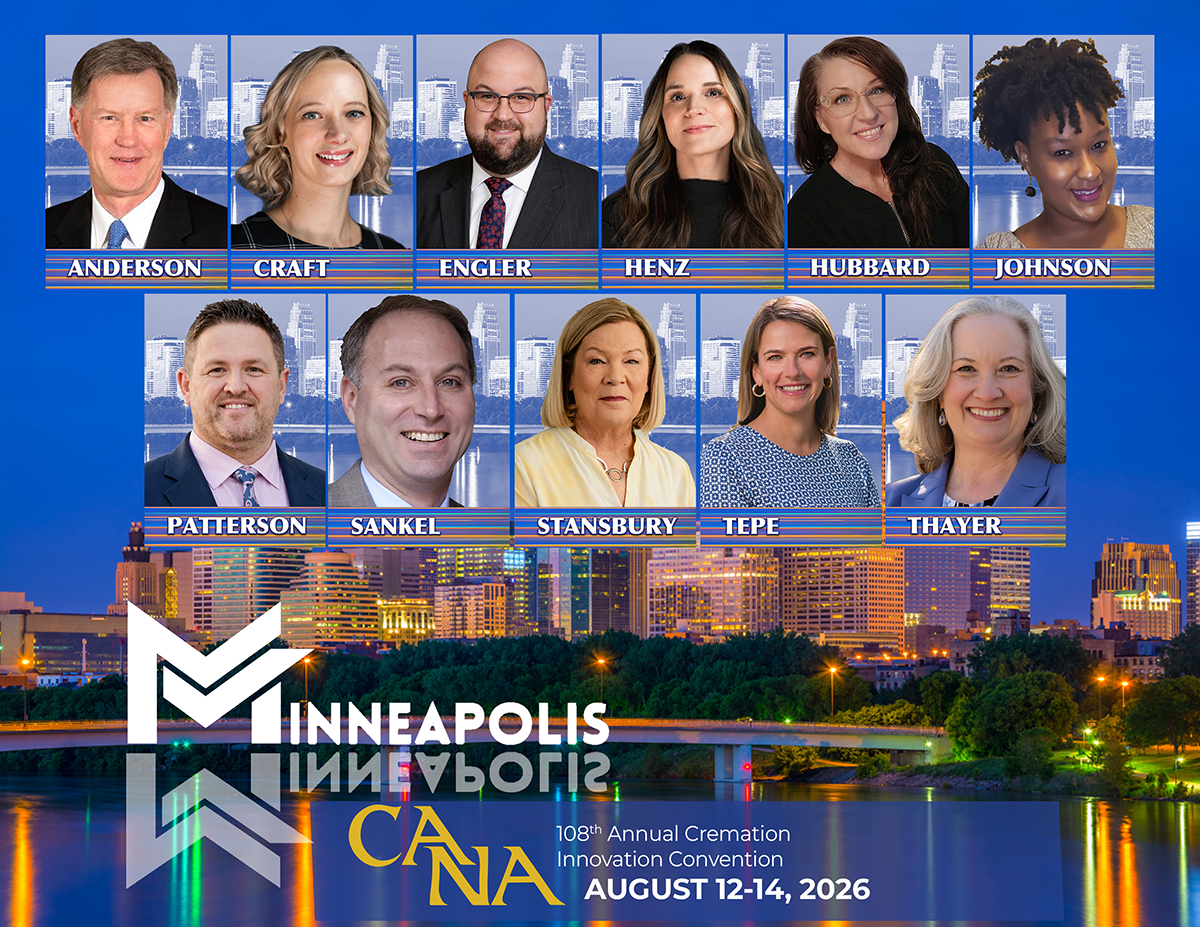
That’s why the Cremation Association of North America’s 108th Annual Cremation Innovation Convention brings funeral professionals, cremation experts, cemetery leaders, and industry partners together for practical conversations about the future of death care in Minneapolis this August 12-14, 2026. As registration nears its close, this is one of the final opportunities to join colleagues from across the profession for discussions that will shape how we serve families in the years ahead.
CANA’s 108th Convention offers a place for professionals to explore what’s changing, what isn’t, and how to continue serving families with confidence in the years ahead. By bringing everyone together in a single-track experience, this event is designed to encourage discussion, connection, and collaboration. Attendees learn together, share ideas with colleagues from across the profession, and have direct access to speakers, exhibitors, and industry leaders throughout the event.
The program opens with funeral service thought leader Tom Anderson, President of Funeral Director Daily, who explores Fads, Trends, Traditions… and the Future of Death Care. Drawing on industry observations and historical perspective, Anderson will help attendees distinguish between temporary changes and lasting shifts that are reshaping the profession.
The future of funeral service also depends on the people entering it. In From Mortuary School to Service: Why Mentorship Matters, Allison Craft, General Manager of Cremation Society Minnesota, and Allison Henz, Community Engagement Lead at Foundation Partners Group, examine how intentional mentorship strengthens retention, builds confidence, and prepares the next generation of professionals for long-term success.
As families encounter new forms of end-of-life support, funeral professionals are finding opportunities to collaborate in new ways. Ashley Johnson, End-of-Life Doula with Loyal Hands LLC, will present Bridging the Gap: Synergizing End-of-Life Doulas with Funeral Directors and Crematories, sharing practical strategies for building partnerships, improving communication, and creating continuity of care for families.
Attendees will also gain practical insight into emerging opportunities for serving families after cremation. During Information is Power, Howard Sankel, President of Options for Ashes, will discuss the growing aftercare market and ways to enhance both customer satisfaction and business success. Sarah Tepe, President of Crowne Vault, will explore Creating a New Approach: A Unified Voice for Cemetery Placement After Cremation, offering strategies to engage families in conversations about long-term remembrance and memorial care.
The act of gathering continues to evolve as families seek meaningful ways to honor loved ones. In What Does Gathering Look Like For You?, funeral director Brent Patterson and Insight Institute Director of Training Glenda Stansbury will share perspectives on language, ceremony, and the power of creating experiences that reflect the unique lives being remembered.
The program also addresses one of the profession’s growing challenges. In Abandoned Urns: A Crisis in America, Honnalora Hubbard of Coldspring USA will provide practical tools to help professionals move conversations beyond disposition and toward legacy, connection, and lasting memorialization. Attendees will also have the opportunity to participate in a tour of Coldspring’s local quarry.
Technology exerts an influence on every profession, including death care. In AI in Funeral Service: Ethics, Compassion, and Professional Judgment, Martha Thayer, Founder and President of Mortuary Training, will explore how artificial intelligence can support funeral professionals while preserving the trust, compassion, and judgment families expect.
The convention concludes with a look at the profession’s history and future through Learning from History: History of CANA Statistics. CANA Historian Jason Engler traces cremation’s journey from a fringe practice to a standard part of modern death care, highlighting the pioneers, innovations, and professional leadership that shaped the industry along the way.
Want to expand your learning even further? Add on a special pre-convention offering, the Certified Hospice Relations Specialist (CHRS) training workshop. This new one‑day certification is designed to help death care professionals build structured, respectful partnerships with hospice organizations. Lacy Robinson will help registrants understand hospice language, values, and team structure and gain step–by–step approaches for outreach, communication, and collaboration in this interactive course.
Every year, attendees leave CANA Convention with new ideas, new professional relationships, and a clearer perspective on where funeral service is headed. From emerging technologies and workforce development to memorialization trends and consumer expectations, the conversations happening at this year’s event will continue long after the convention concludes.
The conversations shaping tomorrow’s funeral service are happening at the CANA Convention. Registration closes soon. Join colleagues in Minneapolis this August for inspiring speakers, innovative solutions, and the kind of connections that fuel your future—set against stunning riverfront views and a vibrant summer city. Enjoy the City of Lakes and book yourself for August 12-14, 2026, at the Minneapolis Marriott City Center: cremationassociation.org/CANA26
###
About CANA
Founded in 1913, the Cremation Association of North America (CANA) is an international organization of over 3,700 members, composed of funeral homes, cemeteries, crematories, industry suppliers, and consultants. CANA members believe that cremation is preparation for memorialization.