Connecting Directors
  • Home
  • Funeral News
    • Company News & Mergers
    • Association & Regulatory News
    • Legislative Updates
    • Supplier Announcements
  • Community & Culture
    • Lighter Side
    • Grief Conversations
    • Director Spotlights
    • Community Outreach
  • Trends & Innovations
    • Products & Startups
    • Tech & AI
    • Cremation & Aquamation
    • Green/Natural Funerals
  • Professional Guidance
    • Leadership & Management
    • Marketing & Social Media
    • Staffing & HR
    • Customer Service
    • Preneed & Sales
  • Video
    • DISRUPT! Series
    • Interviews & Panels
    • Trending Videos
    • Product Demos
No Result
View All Result
  • Home
  • Funeral News
    • Company News & Mergers
    • Association & Regulatory News
    • Legislative Updates
    • Supplier Announcements
  • Community & Culture
    • Lighter Side
    • Grief Conversations
    • Director Spotlights
    • Community Outreach
  • Trends & Innovations
    • Products & Startups
    • Tech & AI
    • Cremation & Aquamation
    • Green/Natural Funerals
  • Professional Guidance
    • Leadership & Management
    • Marketing & Social Media
    • Staffing & HR
    • Customer Service
    • Preneed & Sales
  • Video
    • DISRUPT! Series
    • Interviews & Panels
    • Trending Videos
    • Product Demos
No Result
View All Result
Connecting Directors
No Result
View All Result
Home Uncategorized

3D Printing for Facial Reconstruction (and More)

CDFuneralNews by CDFuneralNews
October 5, 2021
in Uncategorized
0
3D Reconstruction
13
SHARES
31
VIEWS
https://www.facebook.com/disruptmg/https://il.linkedin.com/company/disrupt-media

Reconstructive artists in death care are nothing if not inventive. The work requires it, after all; the nature of the job is artistic, demanding clear vision, a skillful hand, specific knowledge, and technical competence. 

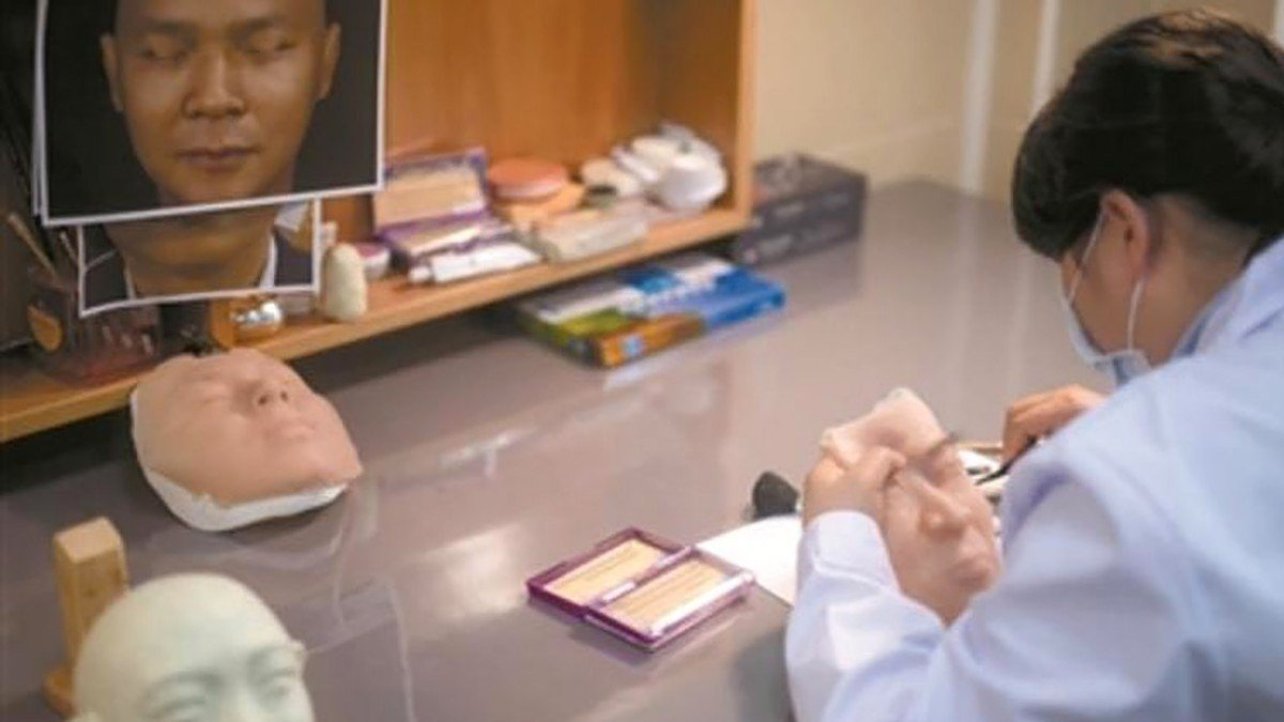
It should surprise no-one that recent extraordinary applications of technology in death care have been driven by reconstructive artists.  3D printed reconstructions of the deceased, generated from nothing but a two-dimensional image, are being used to create replacement faces and body parts to make traumatized or incomplete deceased presentable for an open-casket funeral.

Brilliant! Genius, even! Think of the detail, the precision, the time saved… right? 

Not So Much

A reconstructive artist’s work is difficult under the best circumstances, after all; if printing off missing pieces of people sounds at first too good to be true, a huge hack in the work of body prep that saves time and effort… that may be the case.

Morticians in China first began to use 3D printers for post-death restorative art in about 2016 in Shanghai .  The practice has since spread to funeral homes in Beijing, Guangzhou, and elsewhere, the process refined enough to allow for funeral viewings under circumstances of death where there wouldn’t otherwise have been the opportunity to do so. For the families of victims of severe trauma or accidents, fires, or facial tumors, the result is a merciful one for the grieving.

But what’s actually involved in achieving the final “product”? 

Don’t Hate Me Because I’m Beautiful

Online industry discussions cite a number of issues. For one, the practice is unrealistic, some feel, and unlikely to catch on due to lack of malleability of the printed result.  The prosthetic is a solid construct, which poses a significant obstacle – the printed mask, created of plastics, sand, and other materials, cannot be easily manipulated to correct critical details (earlobes of the wrong length, for example).

There are work-arounds, but they involve the creation of (wait for it) — yet another face.  From The Global Times:

For some families who want their loved ones to look more like they did when they were alive, funeral houses can go a step further to create a silica gel “skin” for the deceased. This gel “skin” once could take up to a week to make, but with current 3D printing techniques moulds can be more easily made, thereby cutting the process down to three days.

The staff said a 3D-printed face covered with a silica gel skin is far better at recreating the deceased’s face – getting as close as 90 percent of the original – as it is far more precise than traditional methods done by hand.

If that weren’t enough, there’s also the issue of excessive odor in the actual process of 3D printing, and possibly intrusive chemical scent residue.

Making Final Goodbyes More Bearable

Proponents of the practice, however, find a great deal of value in being able to provide the comfort and opportunity to families to experience a final in-person goodbye.  And there may well be circumstances where this is unquestionably the best alternative.

Overall, the process sounds promising… but it may be overly labor-intensive for what it accomplishes, possibly prohibitively so – working with the resulting printed “face” requires an inordinate amount of attention and effort for what could be diminishing returns of improvement over perfectly serviceable traditional methods of reconstruction, like waxes and other materials.  

It Speaks for Itself

You be the judge:  an example of a 3D printed reproduction alongside the actual photograph used to create it (original credit here).

Progress doesn’t always necessarily mean improvement.  While the application of the technology gets kudos for creativity, it may be that this is one more instance where current methods are at least as effective as – if not outright better than – a higher-tech solution. At least, for now.

CDFuneralNews
CDFuneralNews

The Connecting Directors newsroom. Reporting on the people, businesses and ideas shaping funeral service.

All posts by CDFuneralNews

Related Articles

UncategorizedFuneral Service Foundation Announces $100,000 Gift from Funeral Directors LifeMay 8, 2023Morticians' Monday Morning MashupScrapyard Rescues & ScareBnbs | 4M #86May 8, 2023UncategorizedEllen McBrayer Wins Inaugural NFDA Inspiration AwardMay 6, 2023
Tags: 3D ReconstructionchinaEmbalming
Previous Post

Homesteaders Recognized as Top Iowa Workplace

Next Post

Who Wants to Live Forever, Anyway

Next Post
Immortality

Who Wants to Live Forever, Anyway

Job Posts Powered By: Deathcarejobs.com

Connecting Directors

Recent Posts

  • Tesla’s Flying Car Announcement Sparks Heated Debate Among Funeral Directors | FFFW 303
  • She Was Gone for 130 Years. This Funeral Director Brought Her Home
  • Not Your Grandpa’s Deathcare Community: Death Rocks Club Opens for Funeral Directors

Categories

  • Association & Regulatory News
  • Community & Culture
  • Community Outreach
  • Company News & Mergers
  • Cremation & Aquamation
  • Customer Service
  • Director Spotlights
  • DISRUPT! Series
  • Friday Funeral Fast Wrap
  • Funeral News
  • Green/Natural Funerals
  • Grief Conversations
  • Interviews & Panels
  • Leadership & Management
  • Legislative Updates
  • Lighter Side
  • Marketing & Social Media
  • Morticians' Monday Morning Mashup
  • Most Popular
  • Preneed & Sales
  • Product Demos
  • Products & Startups
  • Professional Guidance & Resources
  • Staffing & HR
  • Supplier Announcements
  • Tech & AI
  • Trending Videos
  • Trends & Innovations
  • Tukios
  • Uncategorized
  • Video
  • Community & Culture
  • Home
  • Home

© Connecting Directors. All rights reserved.

No Result
View All Result
  • Home
  • Funeral News
    • Company News & Mergers
    • Association & Regulatory News
    • Legislative Updates
    • Supplier Announcements
  • Community & Culture
    • Lighter Side
    • Grief Conversations
    • Director Spotlights
    • Community Outreach
  • Trends & Innovations
    • Products & Startups
    • Tech & AI
    • Cremation & Aquamation
    • Green/Natural Funerals
  • Professional Guidance
    • Leadership & Management
    • Marketing & Social Media
    • Staffing & HR
    • Customer Service
    • Preneed & Sales
  • Video
    • DISRUPT! Series
    • Interviews & Panels
    • Trending Videos
    • Product Demos

© Connecting Directors. All rights reserved.