Article originally appeared on BBC
“It is clear that the stake [the mountaineer] risks to lose is a great one with him: it is a matter of life and death…. To win the game he has first to reach the mountain’s summit – but, further, he has to descend in safety. The more difficult the way and the more numerous the dangers, the greater is his victory.”
– George Mallory, 1924
As though napping, the climber lays on his side under the protective shadow of an overhanging rock. He has pulled his red fleece up around his face, hiding it from view, and wrapped his arms firmly around his torso to ward off the biting wind and cold. His legs stretch into the path, forcing passers-by to gingerly step over his neon green climbing boots.
His name is Tsewang Paljor, but most who encounter him know him only as Green Boots. For nearly 20 years, his body, located not far from Mount Everest’s summit, has served as a grim trail marker for those seeking to conquer the world’s highest mountain from its north face. Many have lost their lives on Everest, and like Paljor, the vast majority of them remain on the mountain. But Paljor’s body, thanks to its prominence, came to be one of the most well-known.
“I would say that really everybody, especially those climbing on the north side, knows about Green Boots or has read about Green Boots or has heard somebody else talking about Green Boots,” says Noel Hanna, an adventurer who has summited Everest seven times. “About 80% of people also take a rest at the shelter where Green Boots is, and it’s hard to miss the person lying there.”
With Paljor’s death came a wave of controversy, including whether he and his two teammates died because other climbers, in their own lust to reach the peak, callously ignored their signs of distress. Scant information is available about the man behind the nickname, however. Type “Green Boots” into a Google search and you will learn that Paljor, along with climbing partners Tsewang Smanla and Dorje Morup, perished in the 1996 storm immortalised in Jon Krakauer’s best-selling book Into Thin Air and, more recently, the big-budget thriller Everest. Paljor, Wikipedia tells you, was a member of the Indo-Tibetan Border Police, and was just 28 years old when he lost his life.
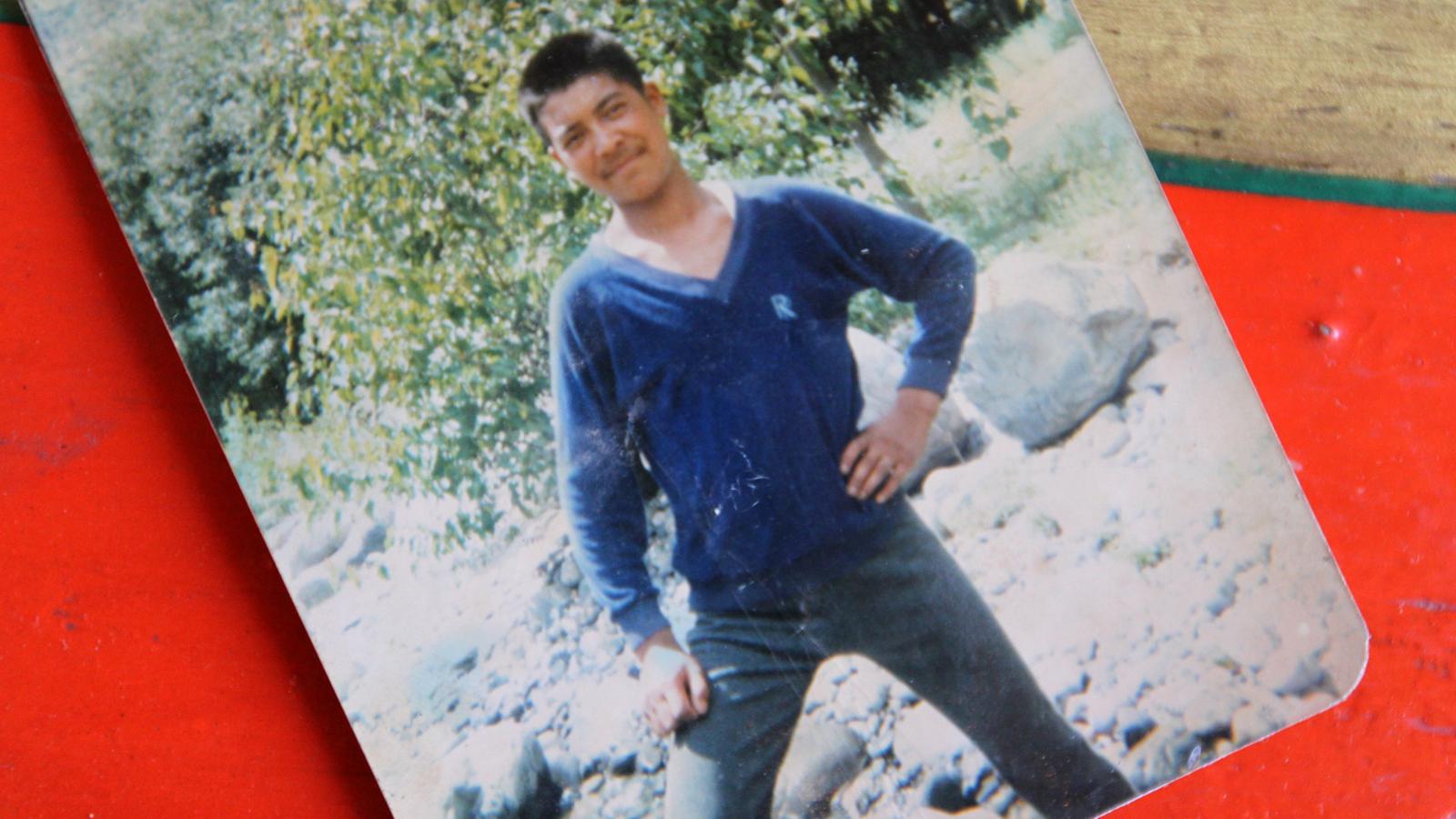
Tsewang Paljor, in younger days. Photographs by Rachel Nuwer.
I admit to feeling a certain morbid curiosity at the thought of Paljor and all the other fallen climbers on the mountain, stranded far from loved ones and frozen in time, forever displaying the moment of their death. But more than a fixation on the macabre, I wished to know the story of the handsome young man in the green boots – especially the circumstances that could allow him to remain on the mountain for so many years.
I was also intrigued by what extreme altitude can do to the human body and mind, and the unexpected impact it can have on the decisions – and even ethics – of a person. But ultimately, I wanted answers to another, more pressing query; one that has been raised countless times but seems to evade explanation: why climb this mountain at all? Why gamble your life on its unforgiving slopes? According to the records of Alan Arnette, a mountaineer based in Colorado whose blog is a trusted source of Everest information, from 1924 to August 2015, 283 people have died on the mountain – 170 foreigners and 113 Nepalis – leading to an overall deaths-to-summit ratio of about 4%. How is it that so many people still see this endeavour as worthwhile?
My desire to answer these questions – in a two-part in-depth series for BBC Future – led me down a rabbit hole of psychology, ethics and climbing culture; to the doorsteps of mountaineering legends and broken-hearted parents alike; to sources spanning Fukuoka, California and Kathmandu. This is my attempt to make sense of what I found.
A cheerful place
As the plane lifts off and heads north from New Delhi, the city’s smog, congestion and sprawl quickly fade from view, replaced by brown, rural flatness that in turn morphs into green hills and terraced fields.
The landscape, however, has only begun to grow in scale and splendour. Hills climb to ever-greater heights, shaking themselves free of villages, fields and vegetation – and then, any remnants of life. Jagged, snow-kissed mountain peaks stretch ever higher, as though trying to pluck our tiny vessel from the sky. Here and there, a valley river punctuates the monochrome landscape with a ribbon of green, a lifeline in an otherwise impossibly inhospitable environment.
We’ve almost reached our destination. The plane begins its descent, and the captain’s voice crackles over the intercom: “I hope all of you have left all of your worries behind in Delhi, so you can have a great time in this cheerful place.”
We’re in the region of Ladakh, “owner of passes,” which lies in India’s far north, in the shadow of the Great Himalayas. It’s early September, when the days are bright and warm but nights are already creeping below 0C.
It was here, in this high altitude desert at 3,800m (12,500ft), that Tsewang Paljor was born on April 10, 1968. He grew up in Sakti – “the golden throne” – an idyllic valley village of whitewashed houses, barley fields and poplar trees.
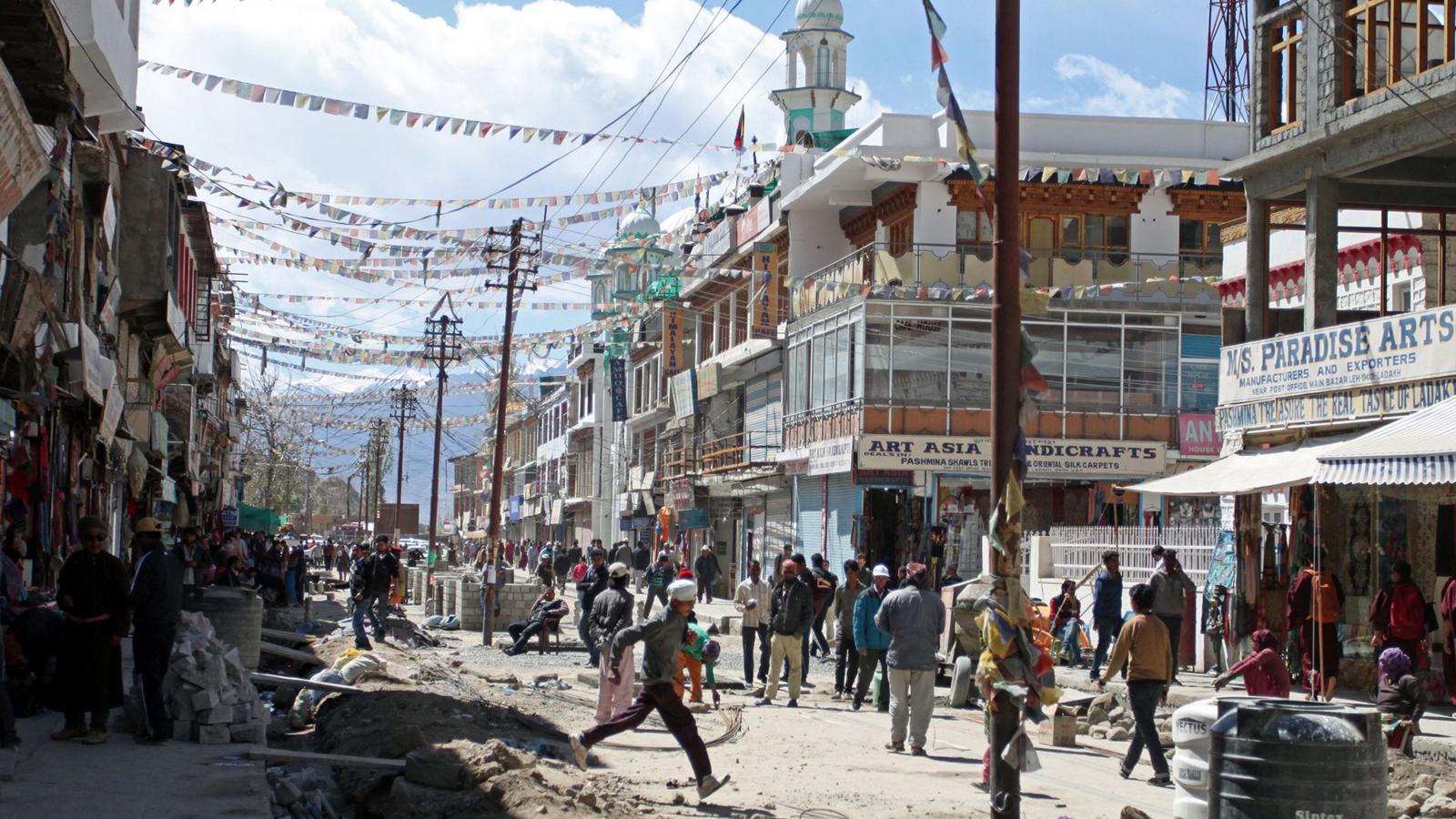
Leh, Ladakh’s dusty capital
We set out for Sakti early on a Wednesday, following the course of the brilliant blue Indus River, passing breathtaking mountainside monasteries, dusty roadside diners and otherworldly plains of rock and barren earth. I travelled with Chultim Dorjey, a sociologist and guide, who is serving as my local lifeline.
We had not contacted Paljor’s family ahead of time, believing our odds of convincing them to speak with us about such a sensitive subject would be greater if we described our mission in person. Now, I was plagued by doubt. Would they refuse to speak with us? Would they be offended? Would anyone even be home?
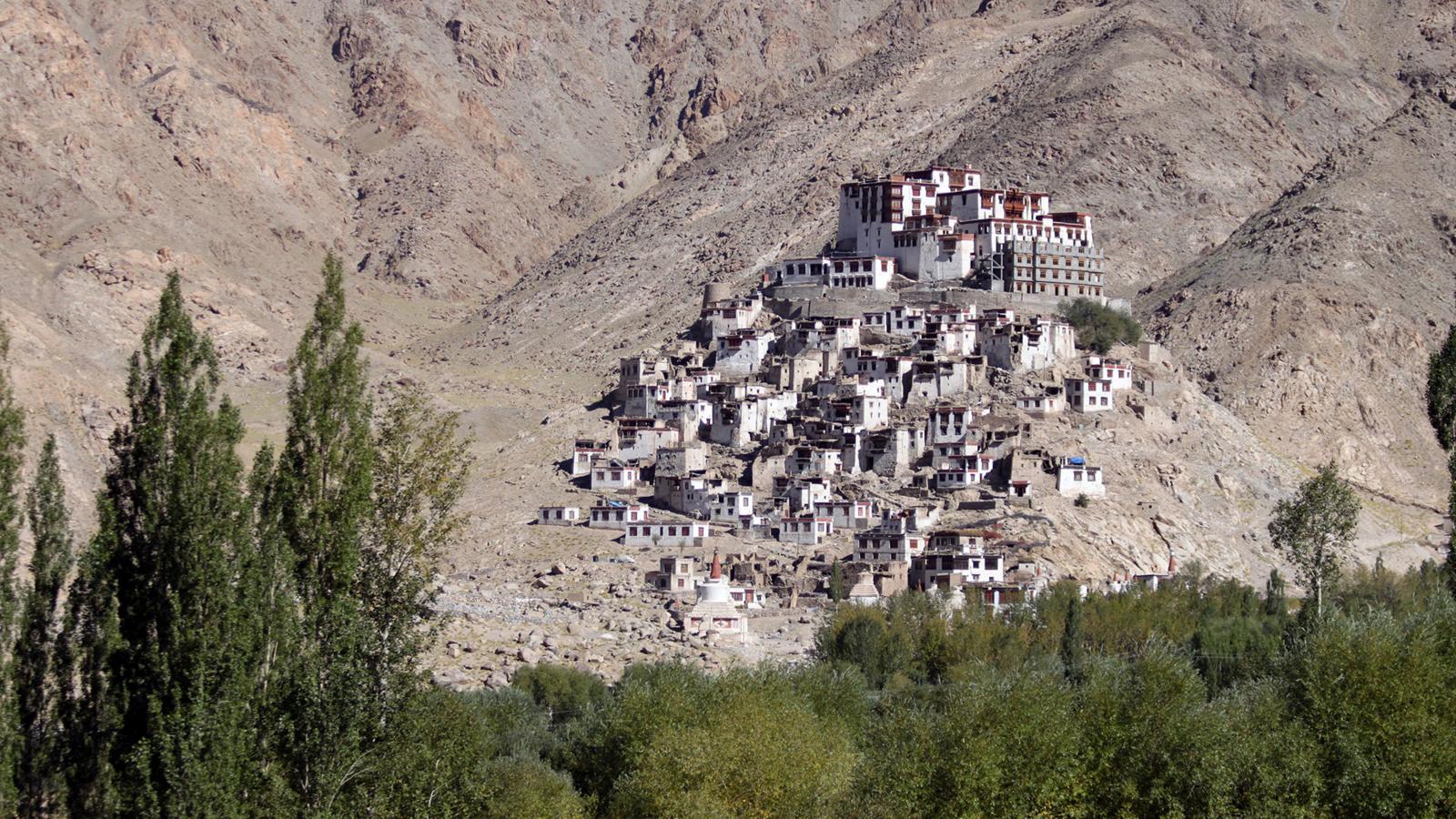
On the road to Sakti

We passed dusty, otherworldly plains on our journey

Passing remote villages on the way to Paljor’s home
About an hour after leaving Leh, we were getting close. Dorjey jumped out of the car, approaching an old man fingering some Buddhist prayer beads on the side of the road. Asking the man where we could find the Fana farm – Paljor’s family surname – the man began gesturing emphatically down the road. In a place like Sakti, populated by just 300 or so households, everyone knows everyone else. “It’s not far now,” Dorjey reported, climbing back into the car.

Getting directions in Ladakh
Minutes later, we arrived at a brown gate, in front of an attractive two-storey home with large windows and fluttering Tibetan prayer flags adorning the roof. “This is it,” Dorjey said. “Fingers crossed.”
My stomach churned as we approached the front door, past a garden brimming with petunias, marigolds and daisies and a yellow dog, who gazed lazily at us from a sunny spot.

Arriving at the home of Paljor’s mother, unsure what to expect
My fears were alleviated, however, the moment Tashi Angmo, Paljor’s mother, opened the door. At 73, her twinkling eyes and smiling face appeared a decade younger. Radiating grandmotherly warmth, she greeted us energetically – “Julay!” – and beckoned for us to come inside, not even asking who we were or why we were here.
We made our way into the sitting room, lined with couches, ornately carved tables and poster-size photos of her grandchildren. After fetching a pot of steaming tea and a plate of biscuits, she and Dorjey exchanged niceties for several minutes. I didn’t have to understand Ladakhi, however, to recognise the moment when Dorjey revealed the true purpose of our visit. Tashi Angmo’s face, until now all smiles, abruptly went slack, her numbed expression speaking of years of accumulated grief and loss. Yet when Dorjey asked if we could proceed with the interview, she said yes.

The house of Tsewang Paljor’s family
A quiet middle child with five siblings, Paljor was known in the village for his polite, compassionate manner. He had a big heart and natural kindness. Though good-looking, even as a teen Paljor never had a girlfriend – he was simply too shy. He once told his brother that he was more interested in dedicating his life to something bigger than himself than in getting married.
As the eldest son, Paljor no doubt felt pressured to provide for his family, which was struggling to make ends meet at their modest farm. So after completing 10th grade, he quit school and tried out for the Indo-Tibetan Border Police (ITBP), whose sprawling campus was located in nearby Leh, Ladakh’s dusty capital. Formed in 1962 in response to increasing hostilities from China, the men who serve in that armed force specialise in high altitude landscapes – a necessity given that India’s border with its domineering neighbour stretches across the Himalayas. To Paljor and his family’s delight, he made the cut.
—Read the rest of the article—